Dog

Dog Harnesses for Comfortable, Controlled Walks

The right harness takes the pressure off the neck and the stress off your walks.

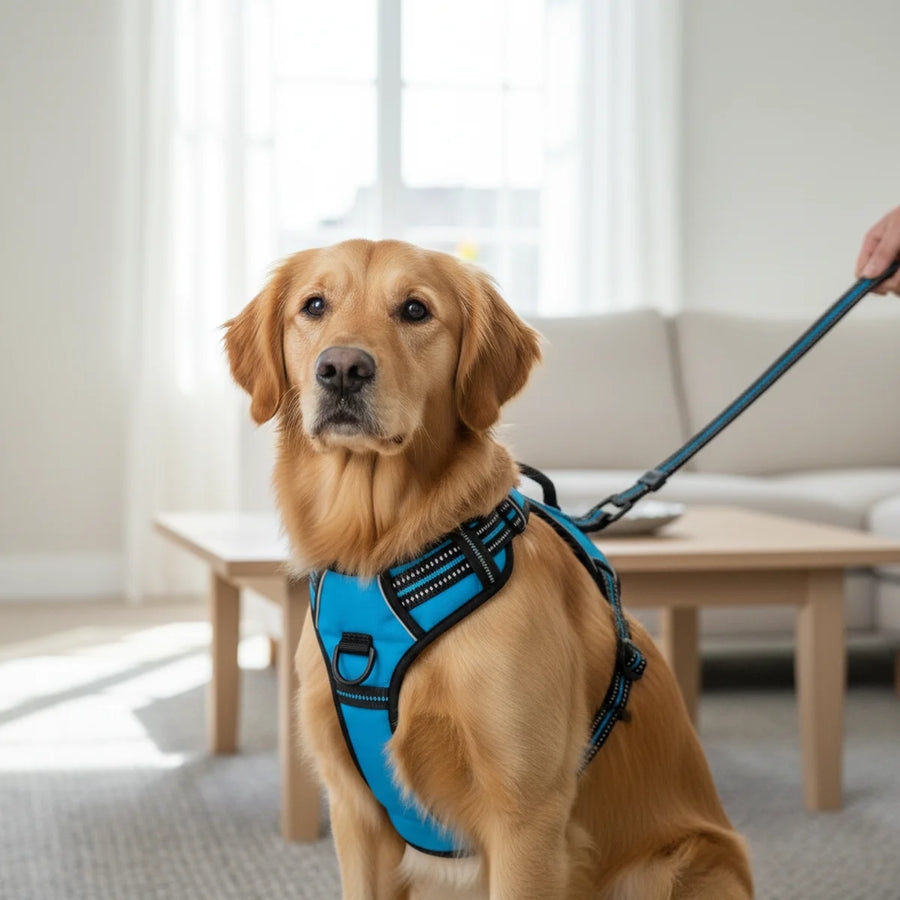
Good dog harnesses spread pressure across the chest instead of the throat, which makes every walk more comfortable for pullers, puppies and flat-faced breeds. From front-clip no-pull designs to lightweight dog harnesses for small dogs and roomy fits for medium and large breeds, the right cut depends on your dog's build and walking style.

Choosing well comes down to three things: an accurate fit, the right leash attachment point and materials your dog is happy to wear every day. This collection brings together everyday walking harnesses, Y-shaped sport fits and car-ready designs so you can match the harness to the way you actually walk.

Dog Harnesses for Comfortable, Controlled Walks
Skip to results list

Active filters:

5 items

Filter

Active filters:

Harness vs. collar: why switch?

A collar concentrates force on the neck. A harness distributes it over the sternum and shoulders, giving you more control with less strain. Many owners keep a collar for ID tags and use a harness for walks. That combination is especially helpful for puppies learning leash manners, seniors and short-nosed breeds that need easy breathing.
Back to contents

No-pull dog harnesses: how the front clip works

A front-clip harness has a ring on the chest. When your dog pulls, the leash gently turns them back toward you, so pulling stops paying off. It works best alongside positive training: reward a loose leash, pause when it gets tight and move on when it relaxes. Most no-pull dog harnesses also include a back ring for relaxed strolls once your dog has the hang of it.

Back to contents

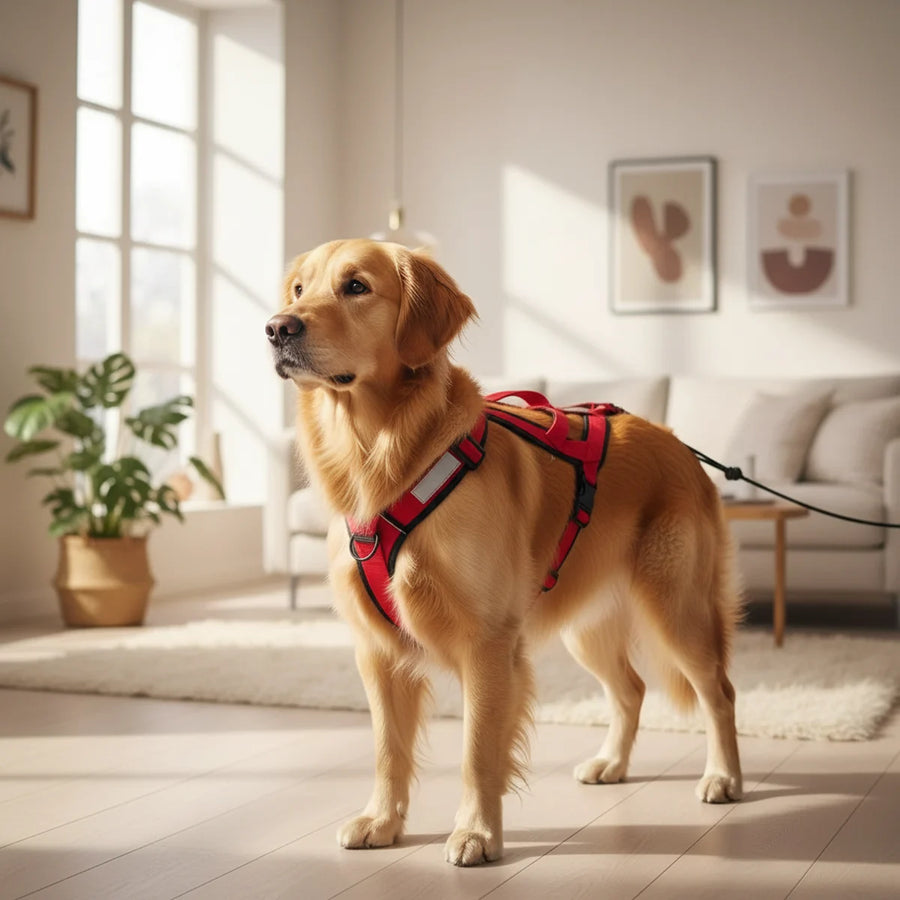
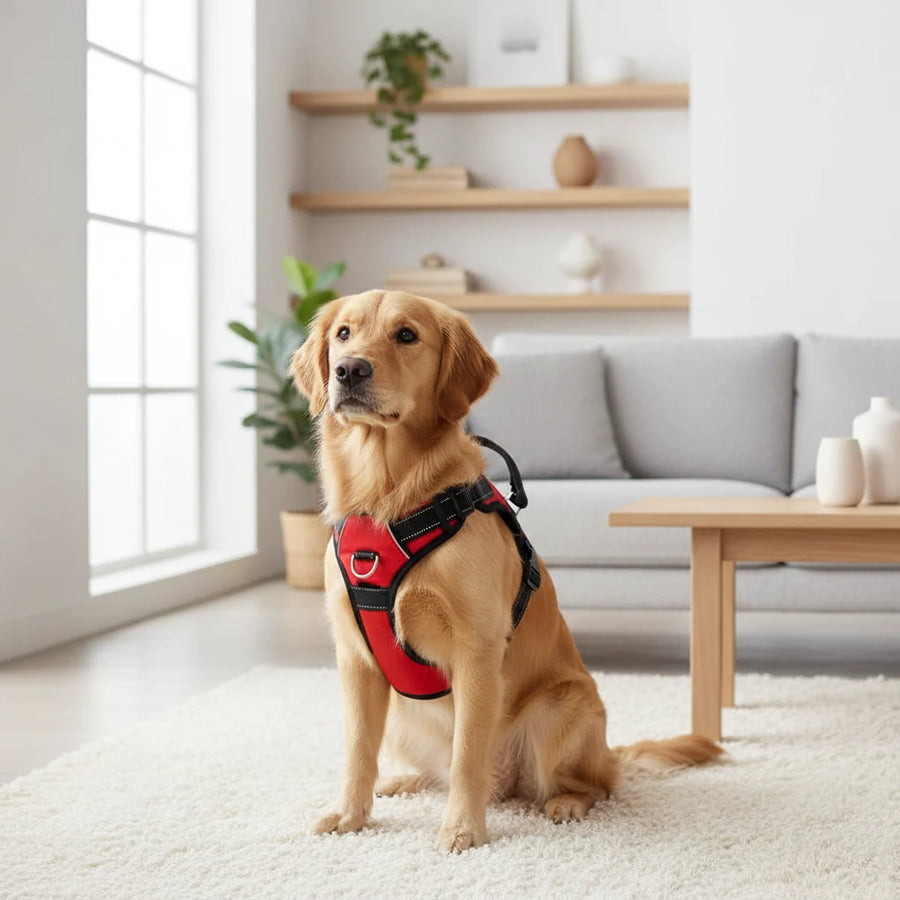
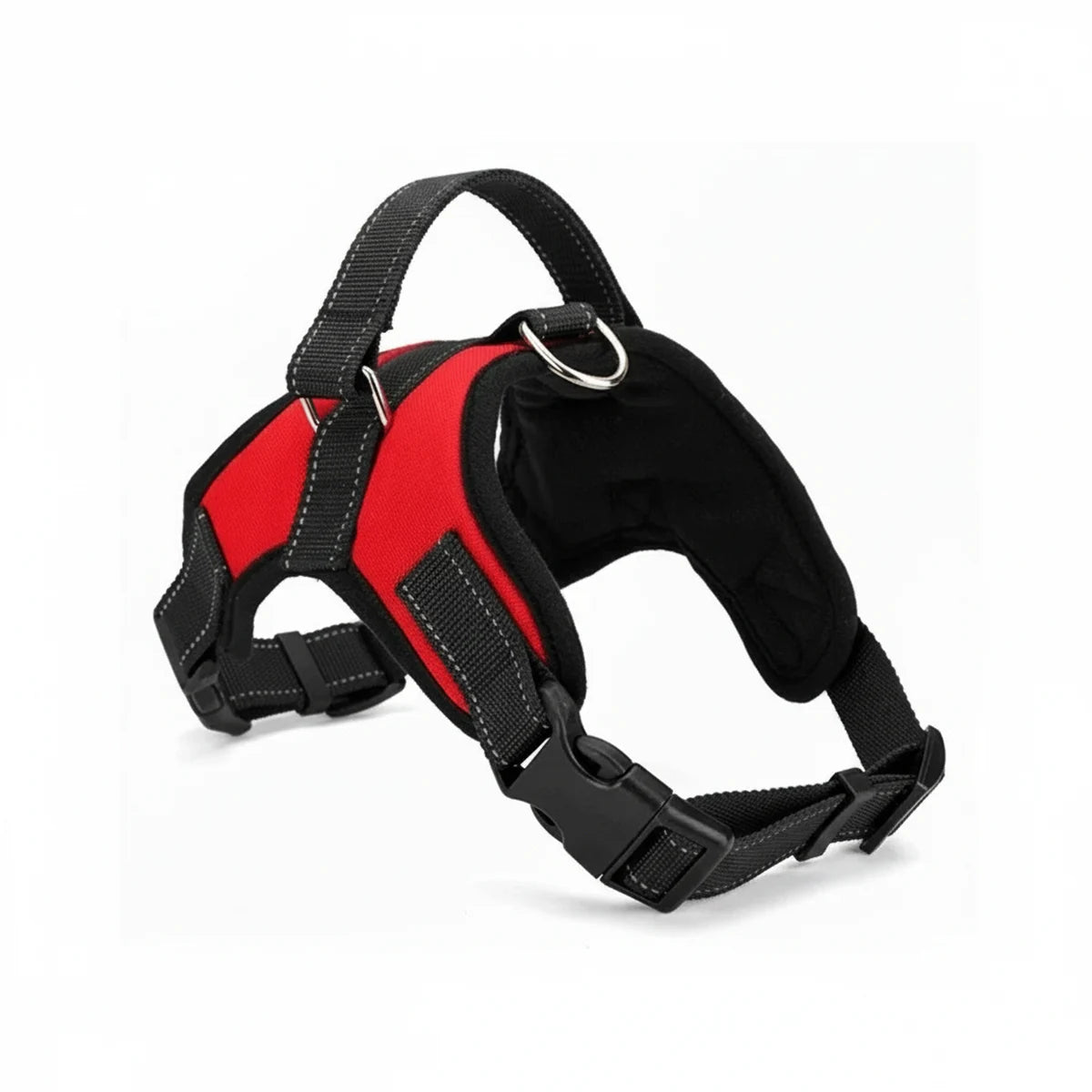
Tiny Harness for Puppy, Nylon Vest with Quick Release – Red

Y-shaped, H-style or vest: which cut fits your dog?

  • Y-shaped: the front strap runs between the legs and keeps the shoulders free. Great for active dogs, hiking and running.
  • H-style: two adjustable straps, simple and versatile, easy to put on and take off.
  • Vest: padded and snug, a favorite for small dogs, puppies and dogs that feel the cold.

Back to contents

How to measure for the right fit

Measure the chest girth at its widest point, just behind the front legs, and the neck at its base. Add about two fingers of room. If your dog falls between sizes, go up a size and tighten the straps. A well-adjusted harness won't slip off when your dog backs up and won't rub behind the front legs.

Back to contents

Safety features worth having

Reflective trim keeps your dog visible on early-morning and evening walks. A top handle lets you guide them over obstacles or hold them close at a crosswalk. For road trips, choose a harness that connects to a car seat belt tether so your dog stays secure if you brake suddenly. Lifting harnesses for large dogs can also help seniors get in and out of the car.

Back to contents

Care and lifespan

Brush trapped hair out of the straps, hand-wash in lukewarm soapy water and air-dry flat. Check stitching, buckles and D-rings every few months. Replace the harness as soon as you notice fraying, especially if your dog is a strong puller.

Back to contents

Questions

Frequently asked questions

Sizes, use, delivery: answers to the questions we hear most.

Still have a question? Get in touch
01What is the best dog harness for a dog that pulls?
A front-clip no-pull harness. The chest ring redirects your dog toward you whenever they pull, so pulling no longer gets them anywhere. Pair it with reward-based training: treat a loose leash, pause when it tightens. Most dogs walk noticeably calmer within a few weeks.
02How do I know what size harness to buy?
Measure the chest just behind the front legs and the base of the neck, then compare with the size chart for that model. Leave about two fingers of space. If your dog is between sizes, choose the larger one and tighten the straps for a snug, secure fit.
03Are harnesses better than collars for small dogs?
For walks, usually yes. Small dogs have delicate necks, and a harness moves pressure to the chest. Dog harnesses for small dogs are light and padded, so they stay comfortable on longer outings. Keep a lightweight collar on for ID tags.
04Can my dog wear a harness all day?
It's best to take it off at home. Worn nonstop, a harness can mat fur and rub behind the front legs. Put it on for walks and car rides, then let your dog relax without it. Check the skin regularly for redness.
05Do Y-shaped harnesses restrict shoulder movement?
No, that's their main advantage. The front strap sits between the front legs and leaves the shoulders free to move. That's why active dogs, hikers and runners love them. Just make sure the junction rests at the center of the breastbone.