In this guide
- Why does my dog pull on the leash?
- Gear that genuinely helps
- The 5-step training plan
- Rewards that work
- Common mistakes to avoid
- Special cases
- Extra exercises that speed things up
- A sample first week
- Holding the leash the right way
- When to call in a trainer
- Walking more than one dog
- How long does it take?
- Frequently asked questions
Dogs pull because pulling gets them where they want to go. To stop dog pulling on leash, use a front-clip no-pull harness and a fixed 5–6 ft leash, reward your dog whenever the leash is loose and stop walking the moment it goes tight. Short daily sessions bring results within a few weeks.
Why does my dog pull on the leash?
Pulling has nothing to do with dominance. The outdoors is exciting, smells are everywhere and we walk far slower than dogs naturally do. Every time a dog pulls and we keep moving, they learn a simple rule: pulling works. A few things make it worse:
- Pent-up energy: dogs that don't get enough exercise explode out of the front door.
- Scent: sniffing is how dogs read the news, and they want to read all of it.
- The opposition reflex: when you pull back, they instinctively pull forward.
- Habit: a puppy allowed to pull usually keeps doing it as an adult.
Gear that genuinely helps
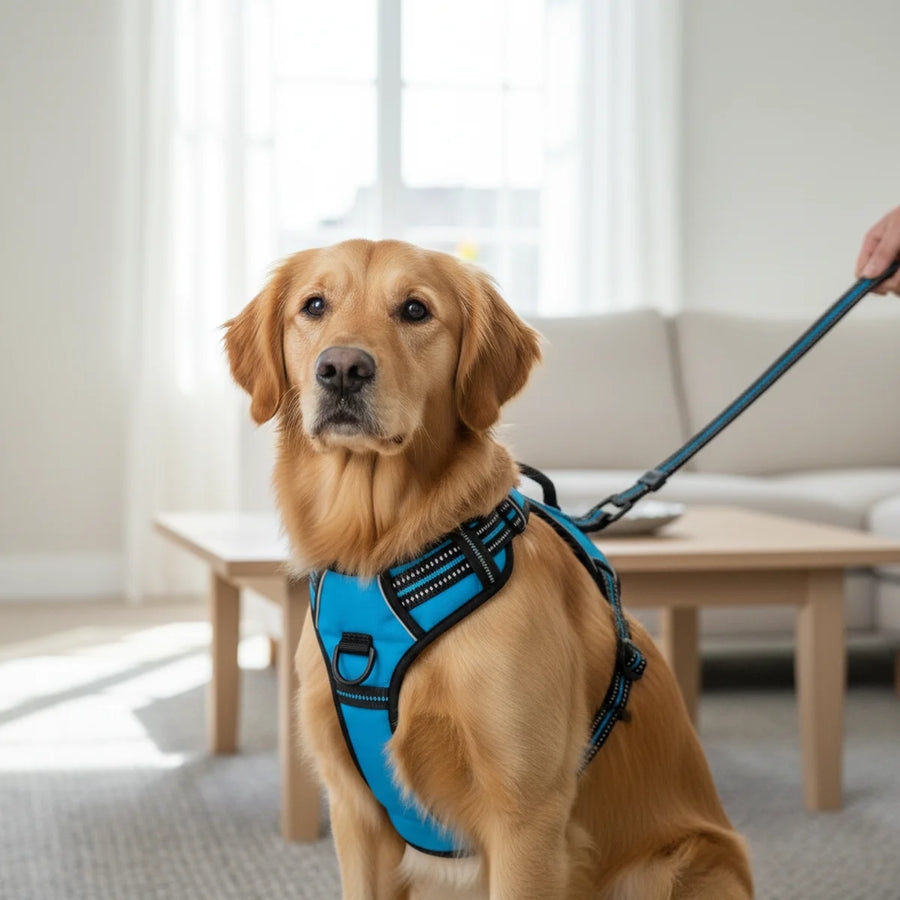
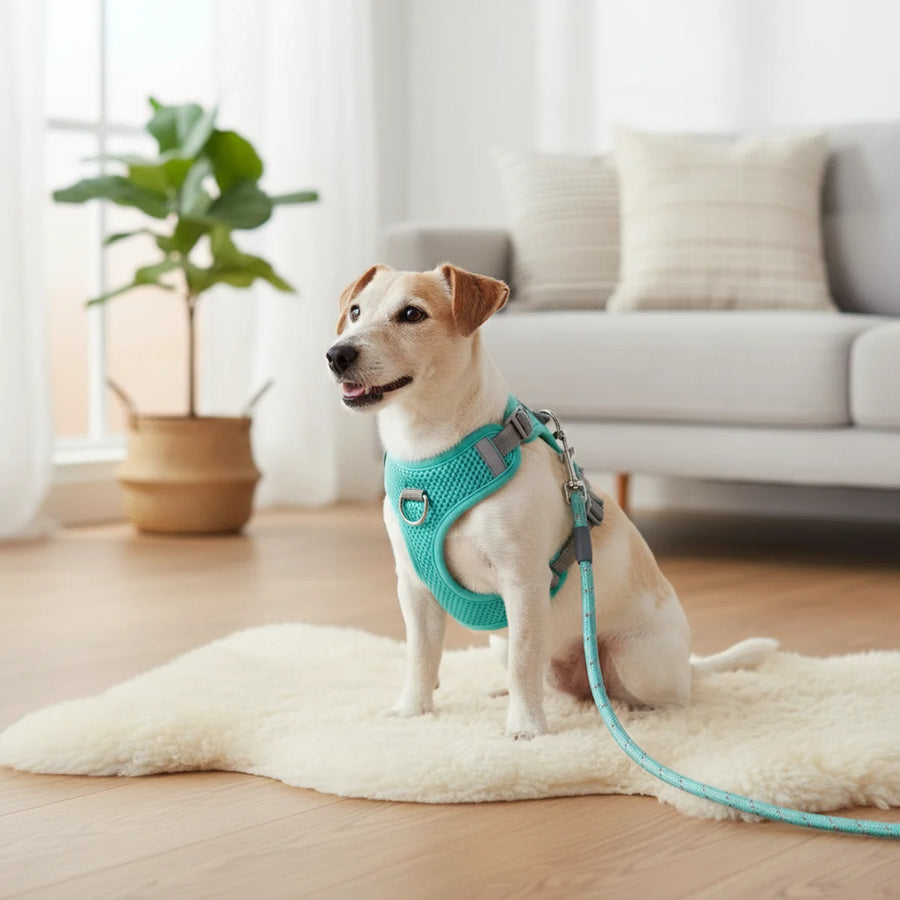
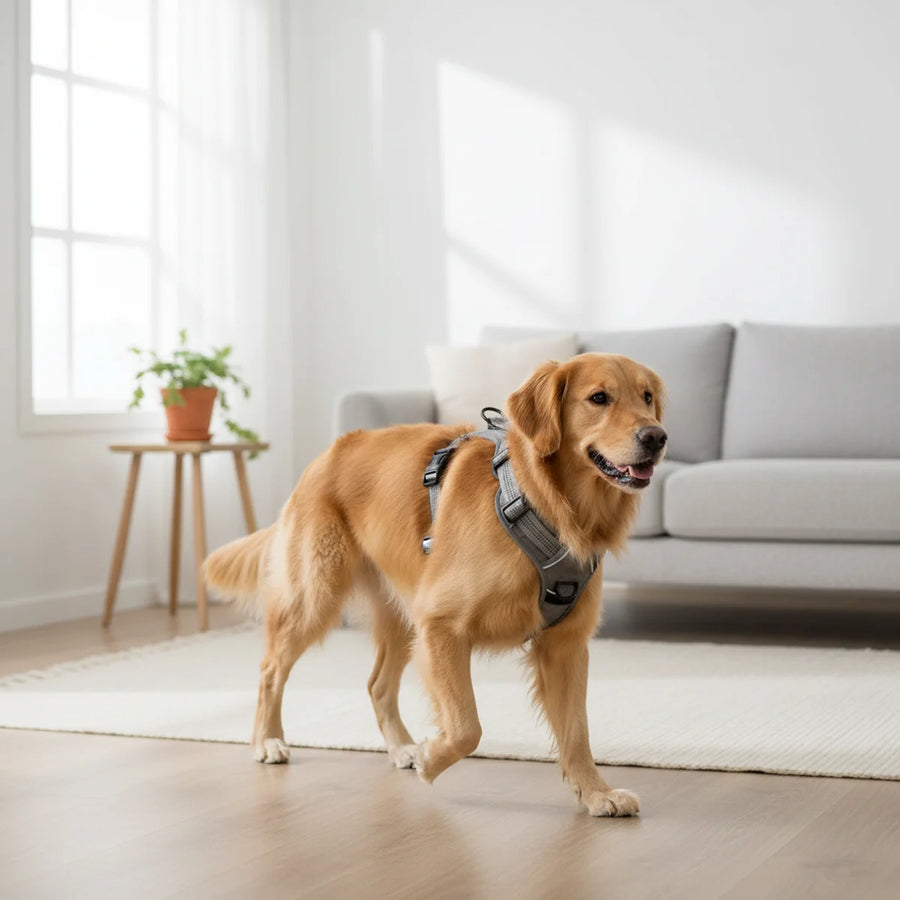
A front-clip no-pull harness
A harness with a chest ring gently turns your dog back toward you whenever they pull, taking the momentum out of it without pain. Browse our dog harnesses and look for a snug fit: two fingers of room under the straps and no rubbing behind the front legs.
A fixed-length leash
While you train, use a standard 5–6 ft leash. Retractable leashes teach the opposite lesson, because pulling makes the leash longer. Save them for open spaces once loose-leash walking is solid. You'll find training-friendly options among our dog accessories.
Keep the collar for ID
A collar is still the best place for tags. Just avoid clipping the leash to it on a dog that pulls hard, since all the force goes into the neck. A lightweight option from our dog collars is all you need for identification.
The 5-step training plan
- Start indoors. In a hallway or backyard with no distractions, reward every step your dog takes beside you on a loose leash. Keep sessions to 3–5 minutes.
- Be a tree. The instant the leash tightens, stop and stand still. Wait until your dog comes back or the leash slackens, then move on and reward.
- Turn around. If your dog pulls again, calmly change direction. They learn that following you is the only way to keep going.
- Raise the difficulty slowly. Quiet street, then a busier sidewalk, then the park. Every new place means going back to short, easy sessions.
- Build in sniff breaks. Give a release cue like "go sniff" and let your dog explore. Walks stay fun, and your dog learns when it's their time to wander.
Rewards that work
Use tiny, high-value treats about the size of a pea. Deliver them right next to your leg so your dog learns that's the place to be. Toys or praise work for dogs that aren't food-motivated. Reward often at first, then gradually space it out as the habit forms.
Common mistakes to avoid
- Jerking the leash: it creates tension and usually makes pulling worse.
- Inconsistency: if the rules change from day to day or person to person, your dog can't learn them. Everyone in the household should follow the same plan.
- Sessions that run too long: ten focused minutes beat a frustrating 45-minute battle.
- Skipping exercise and enrichment: an under-stimulated dog struggles to walk calmly. Add play, sniffing games and puzzle toys to their day.
Special cases
Puppies
Start the day your puppy comes home, with a light harness and very short sessions. Puppies learn fast but tire fast too, so always end on a win.
Large dogs that pull hard
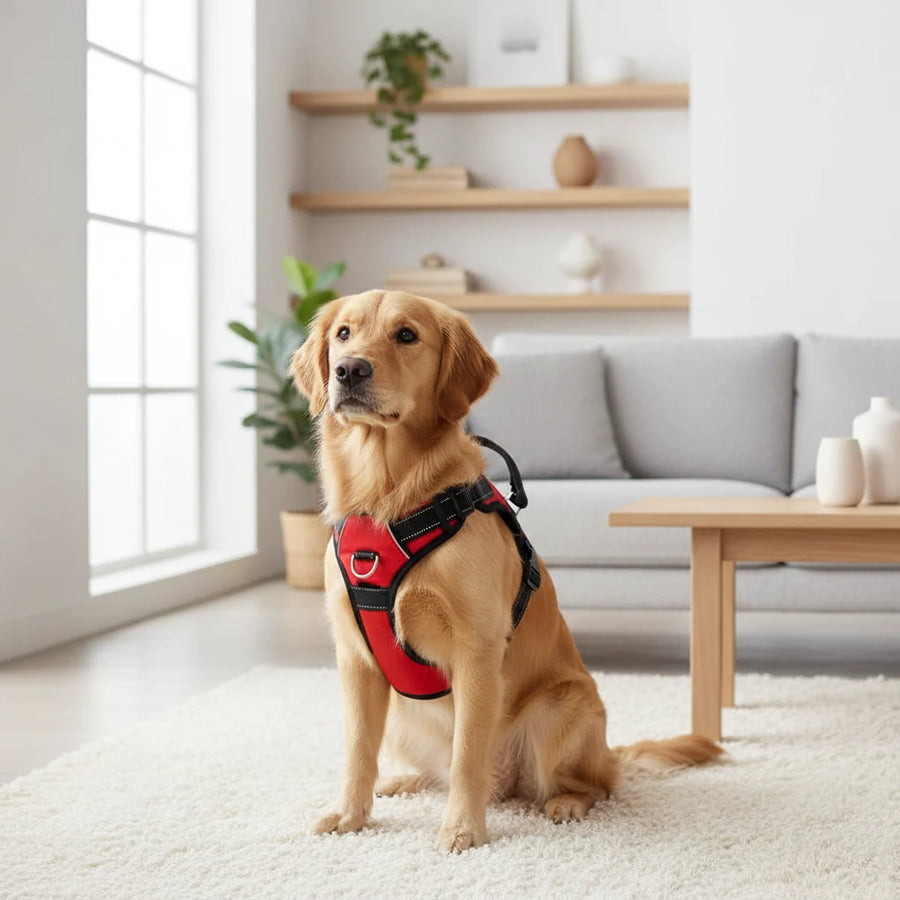
Choose a sturdy harness with both a front and back ring plus a handle. Practice in calm places where you stay in control before tackling busy streets.
Dogs that lunge at other dogs
If your dog pulls toward other dogs, increase the passing distance and reward every glance back at you. For strong reactions, a certified positive-reinforcement trainer can speed things up considerably.
Extra exercises that speed things up
The "look at me" game
At home, say your dog's name and reward the instant they look at you. Repeat until the glance is immediate, then practice outside. A dog that checks in with you on walks is a dog that isn't staring at the horizon and pulling toward it.
Zigzag walking
In a quiet spot, change direction often: a few steps left, turn around, a few steps right. Reward every time your dog follows. They learn to keep an eye on you rather than on everything happening down the street.
Calm starts
Many dogs pull from the doorstep because they're already wound up. Wait until your dog sits calmly before putting the harness on. Open the door; if they rush, close it gently. Only head out once they wait quietly, so the walk starts in the right frame of mind.
A sample first week
- Days 1–2: five-minute indoor sessions, very frequent rewards and the "look at me" game.
- Days 3–4: first walks on a quiet street using the "be a tree" stop. Keep walks shorter but successful.
- Day 5: add turnarounds and zigzag walking.
- Days 6–7: a slightly busier location, cued sniff breaks and slightly fewer treats.
Jot down progress after each walk. The number of stops you need usually drops quickly, which keeps both of you motivated.
Holding the leash the right way
Hold the leash in one hand with a gentle "J" or "U" of slack between you and your dog, the visual sign of a loose leash. Keep your arms relaxed by your sides. If you need to shorten the leash, do it smoothly rather than with a sudden yank. Your body language matters too: a relaxed handler walking at a steady pace helps the dog settle into the same rhythm.
When to call in a trainer
If your dog still pulls just as hard after several weeks of consistent practice, or reacts strongly to bikes, cars or other dogs with barking and lunging, a certified positive-reinforcement trainer can watch you walk and spot what's getting in the way. A few sessions are often enough to find the problem: a harness that doesn't fit well, rewards that aren't motivating enough or an environment that's too challenging for your dog's current level. Avoid methods built on pain or intimidation. They damage your relationship and tend to raise stress, which usually means more pulling, not less.
Walking more than one dog
Train each dog separately first. Walking two dogs that both pull doubles the force and halves your attention, so neither learns much. Once each dog walks nicely alone, combine them on quiet routes and keep rewarding both. A coupler leash or two separate leashes can work, but only after the basics are solid.
How long does it take?
Most dogs show clear progress within one to two weeks of daily practice. Reliable loose-leash walking in every situation often takes one to three months. Consistency is what matters: every walk is a training session, even a short one.
Celebrate the small wins along the way. The first time your dog walks past a squirrel without lunging, or turns back to you on their own when the leash tightens, you'll know the new habit is taking hold.