Cat

Cat Towers and Cat Trees for Climbing, Scratching and Napping

Climb, scratch, watch and nap: vertical territory all their own.

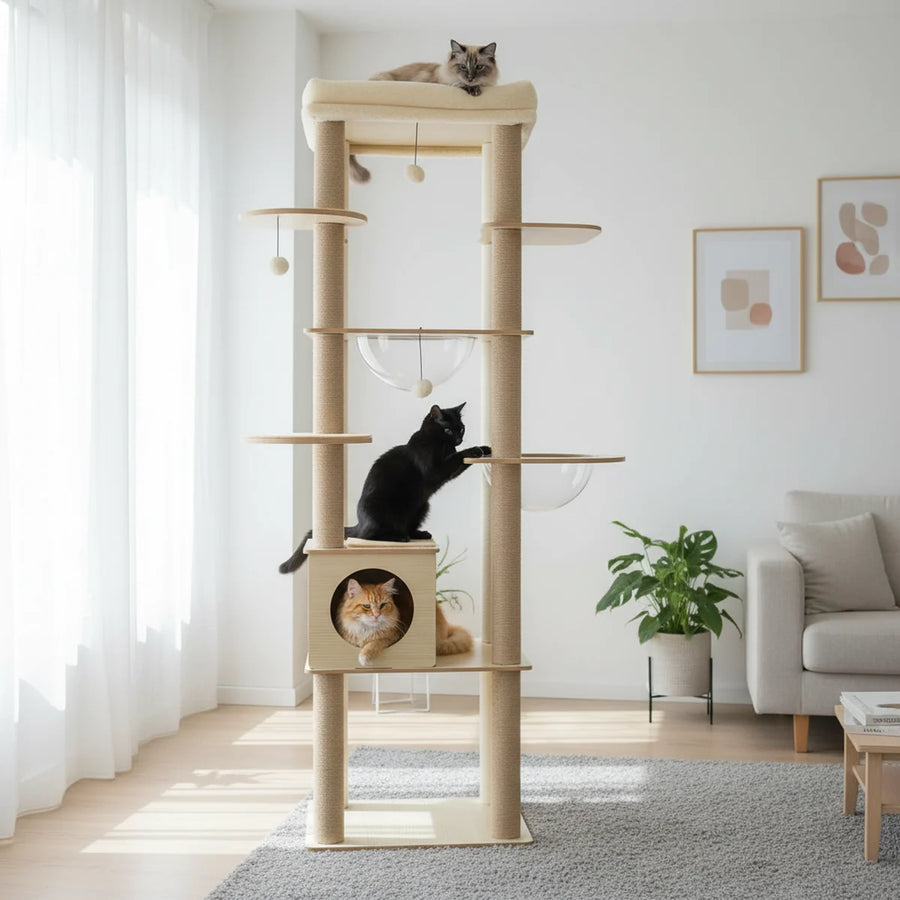
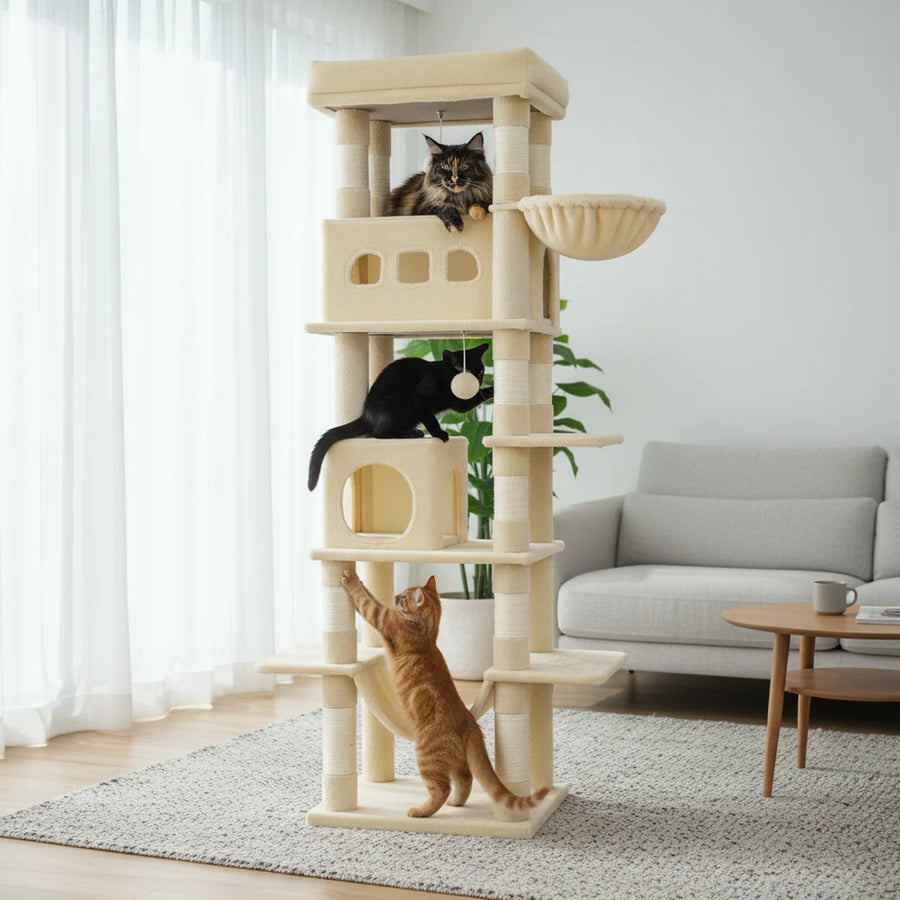
A cat tower meets three core needs of indoor cats: climbing, scratching and watching their world from up high. Choose a tall cat tower for multi-cat homes, a compact model for apartments, a wooden or modern design that suits your living room, or wall-mounted shelves that save floor space.

Stability comes first. Large cats like Maine Coons need wide perches, thick sisal posts and a heavy base or wall anchor. Fabric, height and the number of hideaways do the rest. A good cat tree becomes your cat's favorite spot and saves your sofa at the same time.

Cat Towers and Cat Trees for Climbing, Scratching and Napping
Skip to results list

Active filters:

5 items

Filter

Active filters:

Why every indoor cat needs a tower

Cats feel safest up high, where they can watch without being disturbed. A cat tree also gives them a built-in scratching post that protects your furniture, plus cozy hideaways for naps. It's one of the best ways to reduce boredom and stress for cats that live indoors full time.
Back to contents

How tall should it be?

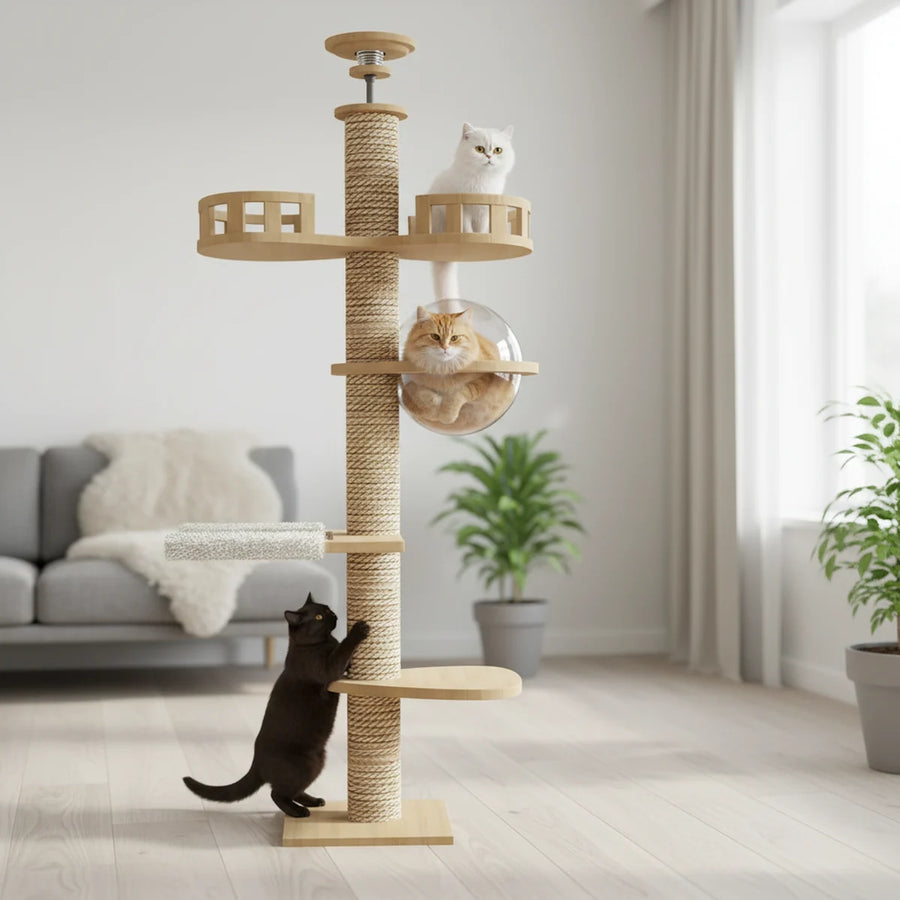
Kittens and senior cats do best with a small tower under 3 feet, with closely spaced steps. Active adults enjoy 4 to 6 feet. Floor-to-ceiling towers create a true vertical playground but must be anchored. The taller the tower, the more stability matters.

Back to contents

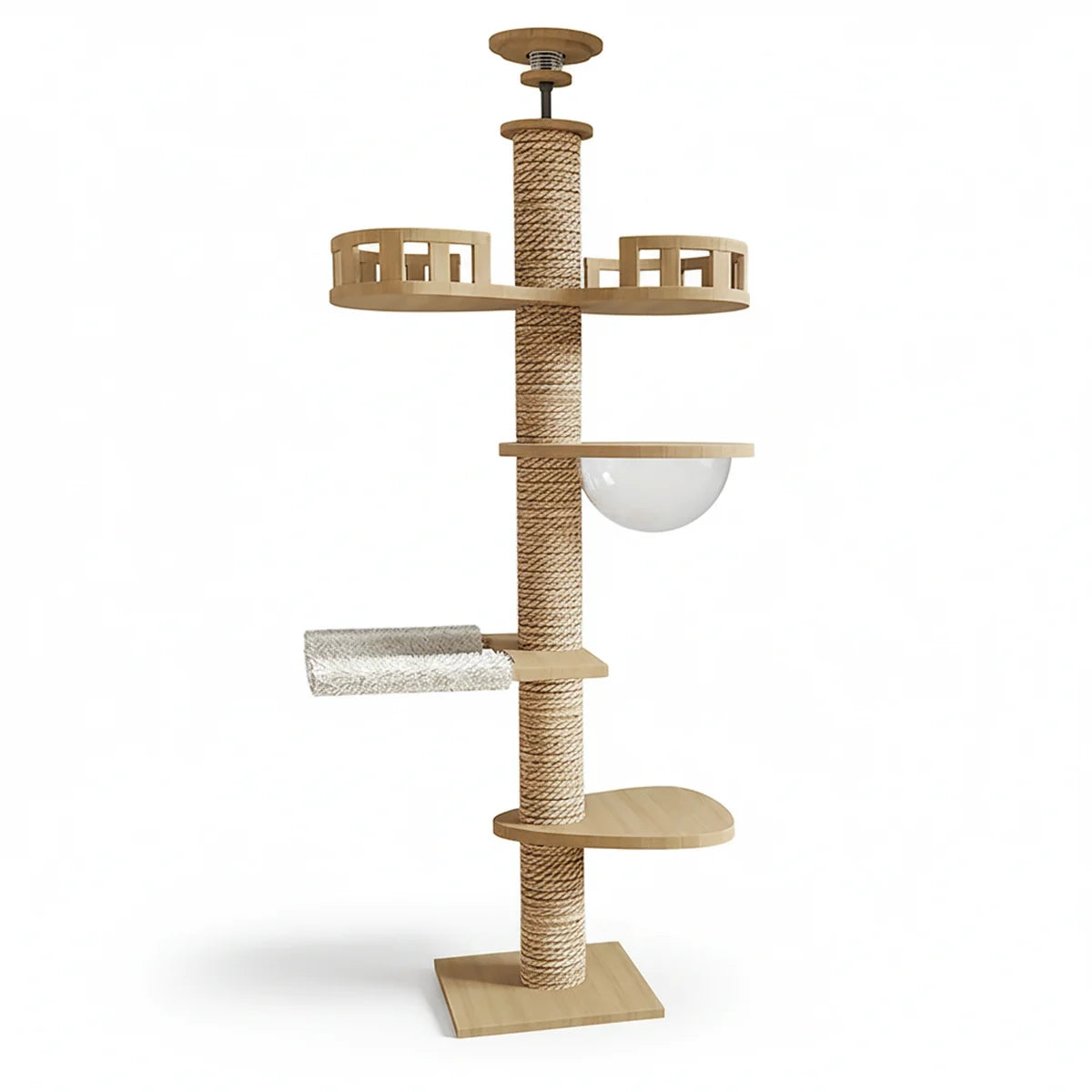
Floor-to-Ceiling Cat Tree for Heavy Cats with Pine Base – B Style

Stability for big cats

A wobbly tower scares cats, and they stop using it. For Maine Coons and cats over 13 lbs, look for posts at least 3.5 to 5 inches thick, wide platforms and a heavy base. Anchor tall models to the wall with the included kit for peace of mind.

Back to contents

Materials: sisal, plush and wood

  • Sisal rope: wraps the posts and is ideal for scratching.
  • Plush fabric: comfortable on perches and inside condos.
  • Solid wood or plywood: more durable and design-friendly for living spaces.

Back to contents

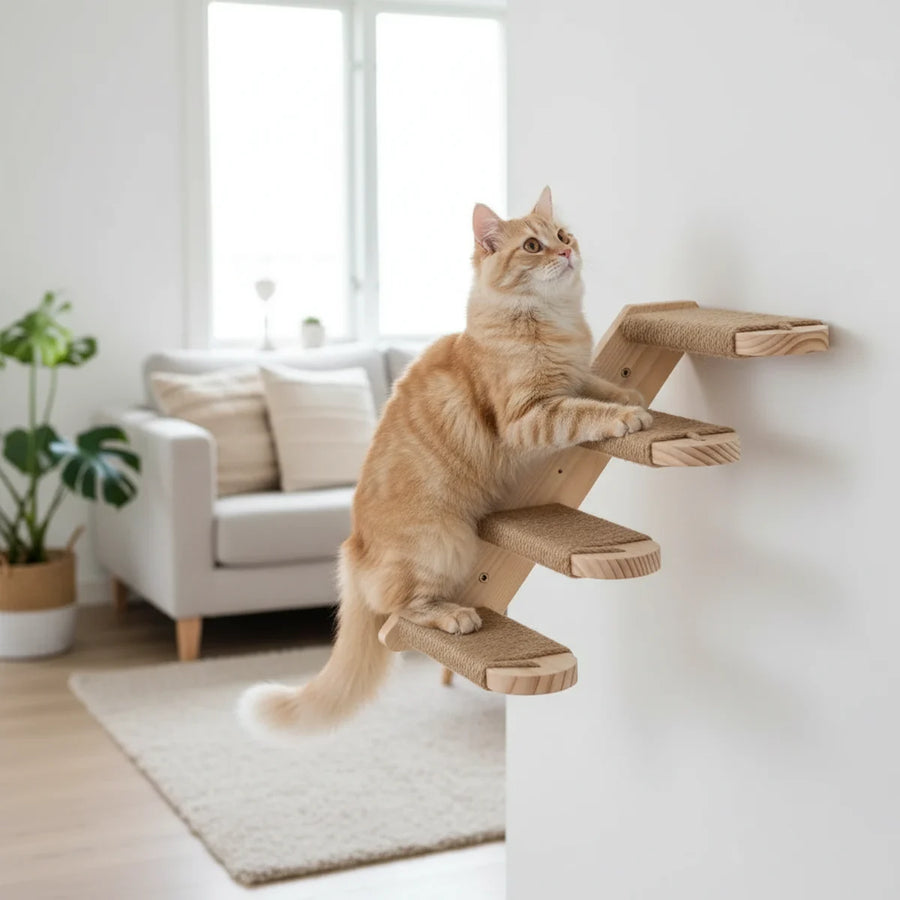
Wall-mounted cat shelves

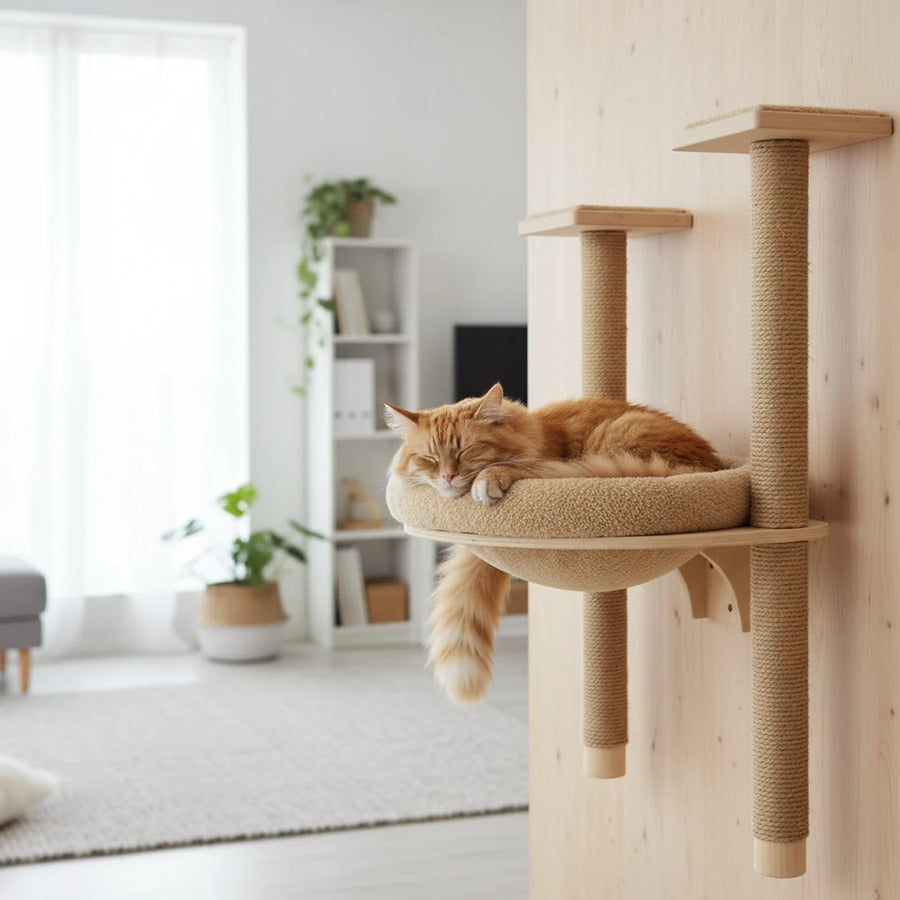
Shelves, steps and hammocks mounted on the wall create a climbing route without using floor space. Perfect for small apartments, you can add pieces over time. Check the weight rating for each piece and fix them into studs or with appropriate anchors.

Back to contents

Where to place it

Put the tower near a window so your cat can watch birds and soak up the sun. Avoid isolated corners; cats like to be close to family life. In multi-cat homes, offer several perches at similar heights to prevent squabbles over the best seat.

Back to contents

Care and upkeep

Vacuum the perches weekly, wash removable cushions and check that screws stay tight. When the sisal wears out, many towers let you replace a single post instead of the whole tree.

Back to contents

One tower or several?

In homes with more than one cat, two medium towers in different rooms often work better than one giant tree, because each cat can claim a high spot without competing. Add a few wall shelves to connect them and you've built a full vertical territory.

Back to contents

Questions

Frequently asked questions

Sizes, use, delivery: answers to the questions we hear most.

Still have a question? Get in touch
01How tall should a cat tower be?
Under 3 feet for kittens and seniors, 4 to 6 feet for active adult cats. Floor-to-ceiling models suit keen climbers but must be anchored. The taller the tower, the more important stability and a wall anchor become.
02What is the best cat tower for big cats?
A very stable model with thick sisal posts, wide platforms and roomy condos sized for large breeds. The base should be heavy and the top anchored to the wall. Always check the weight rating of each platform.
03How do I get my cat to use a new cat tree?
Place it near a window or a spot your cat already likes, scatter treats or catnip on the perches and play with a wand toy around it. Most cats claim it within a few days.
04Are wall-mounted cat shelves safe?
Yes, when installed properly. Use anchors suited to your wall, ideally screwing into studs, and respect the weight rating of each shelf. Test each piece before letting your cat jump on it.
05How do I clean a cat tower?
Vacuum hair weekly, machine-wash removable cushions and wipe surfaces with a damp cloth. Check screws regularly and replace worn sisal posts if your model allows it.