In this guide
- Why does my cat scratch the couch?
- Step 1: Figure out your cat's scratching style
- Step 2: Choose the right scratcher
- Step 3: Put it in the right place
- Step 4: Make the couch less tempting
- Step 5: Reward every good choice
- Step 6: Stay calm if they scratch the couch
- Step 7: Keep claws trimmed
- What not to do
- Special situations
- How long does it take?
- When cats scratch the couch, chairs and curtains
- A three-week plan
- Keep scratchers fresh
- Choosing a more scratch-resistant couch
- Play as prevention
- What if nothing seems to work?
- Frequently asked questions
Cats scratch furniture because they need to scratch, and your couch is sturdy, central and feels great under their claws. To stop cat scratching furniture, put a scratcher that matches their style right in front of the damaged spot, cover the furniture temporarily and reward every time they use the scratcher. Never punish: redirect instead.
Why does my cat scratch the couch?
Scratching isn't revenge or bad manners. It's a natural, essential behavior with several jobs:
- Claw care: removing the worn outer sheath to reveal a fresh claw.
- Stretching: scratching up high stretches the back, shoulders and legs.
- Marking territory: scent glands in the paw pads leave a smell, and the marks are a visual signal too.
- Releasing emotion: excitement when you come home, frustration or stress.
Your couch ticks every box: it's stable, it's in the heart of the home, the fabric gives great grip and it smells like you. To protect it, you need to offer something even more appealing.
Step 1: Figure out your cat's scratching style
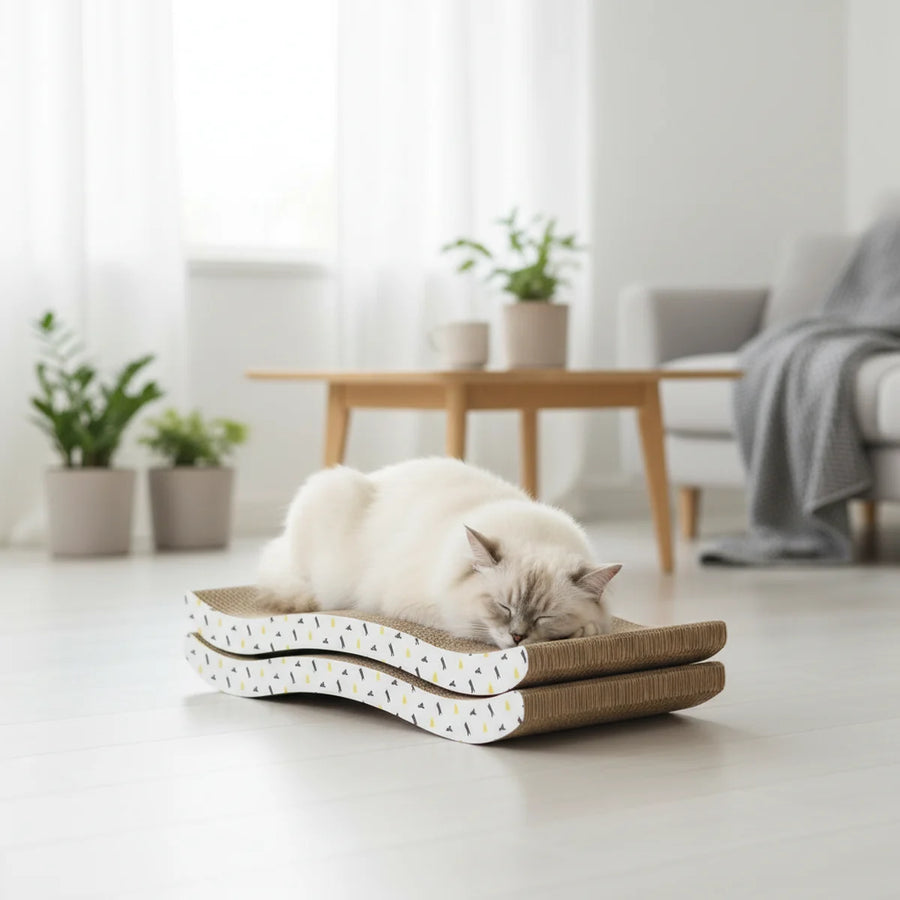
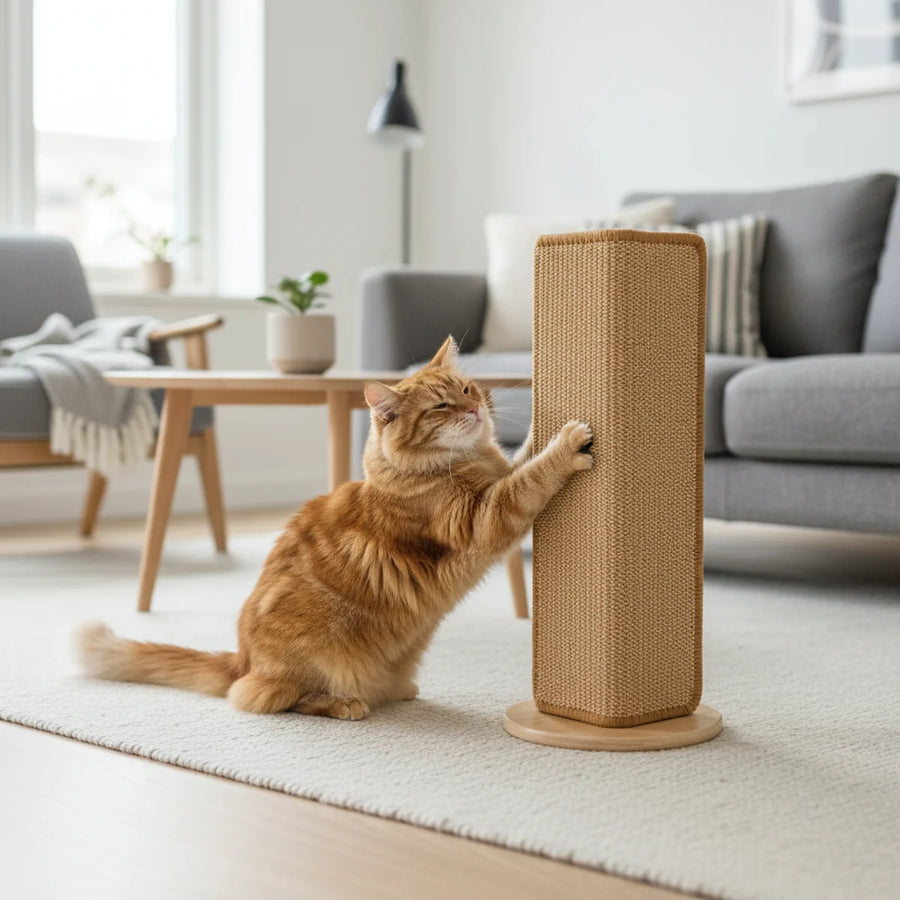
Watch where and how your cat scratches. If they stretch up on their hind legs against the arms or sides of the couch, they're a vertical scratcher and need a tall, sturdy post. If they scratch the seat or rug, flat out, they prefer a horizontal cardboard pad. Many cats enjoy both.
Step 2: Choose the right scratcher
Great cat scratchers share three qualities:
- Stable: a post that wobbles or tips will never be used again.
- Tall enough: a vertical scratcher should let your cat stretch fully, often 28 to 35 inches.
- Satisfying texture: sisal rope for posts, corrugated cardboard for flat pads. Avoid carpet-covered scratchers that match your rugs; your cat can't tell the difference.
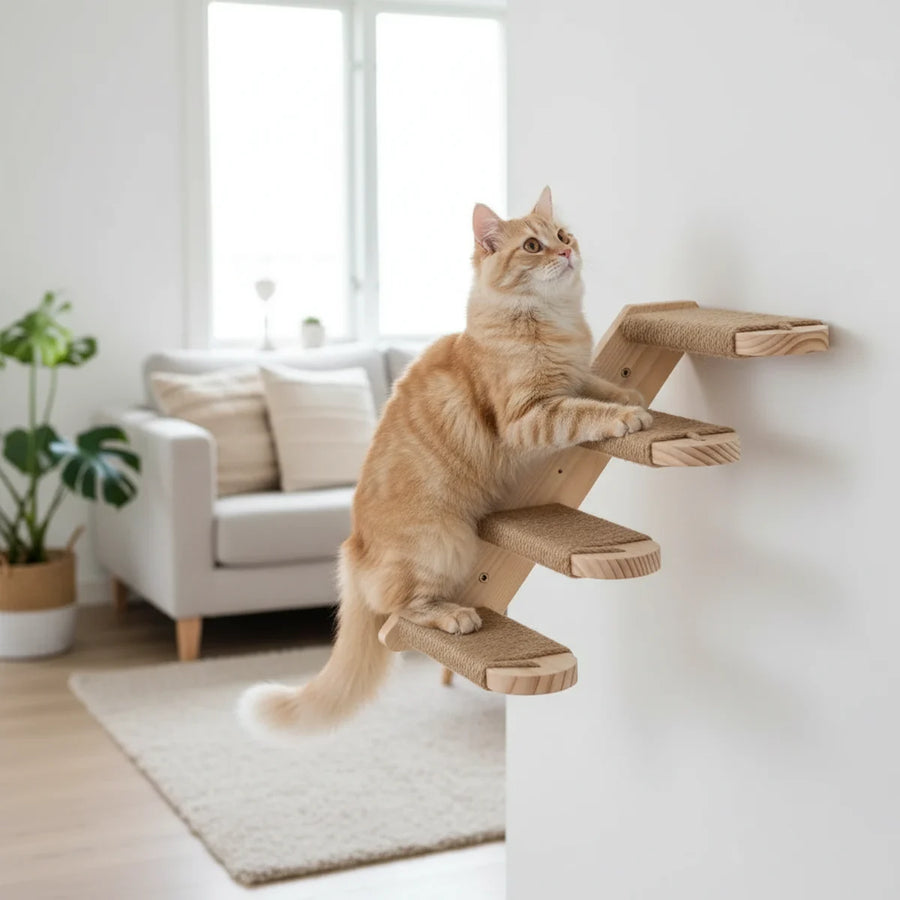
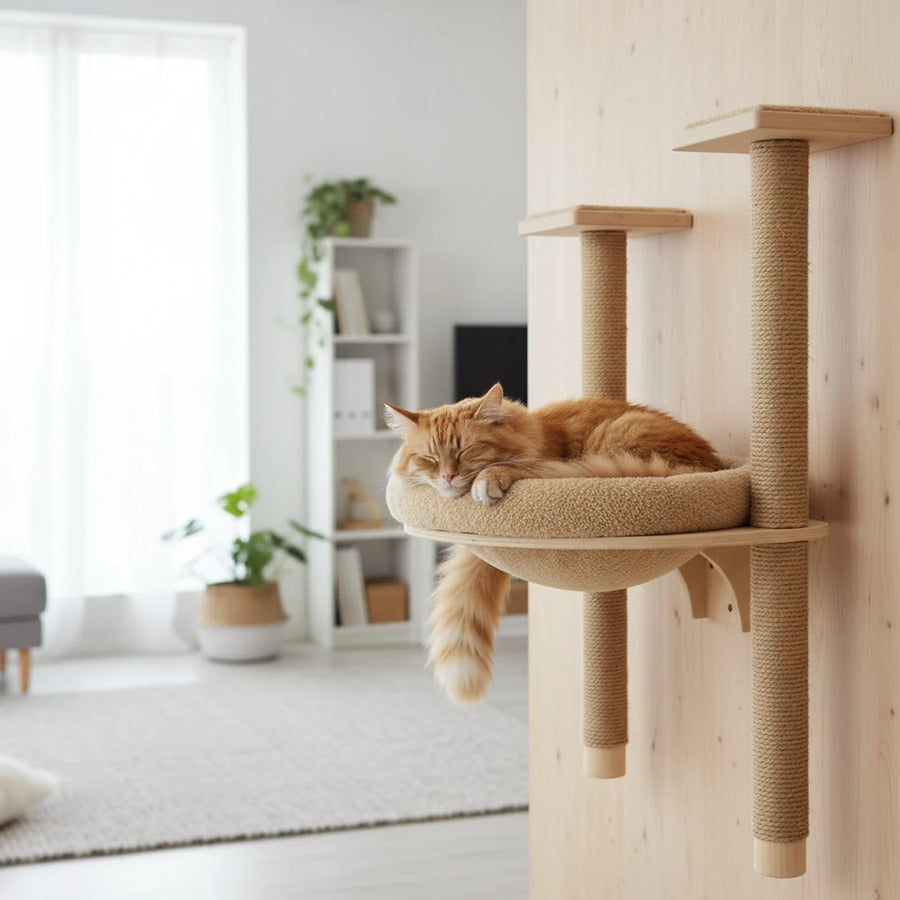
cat trees combine scratching, lookout perches and hideaways, which often makes them irresistible.
Step 3: Put it in the right place
This is the most common mistake: the scratcher ends up in a corner far from the couch. Place it directly in front of the damaged area or against the arm your cat targets. Cats often scratch right after waking, so a second scratcher near their nap spot works well. Add one near room entrances too, since cats like to mark high-traffic areas.
Step 4: Make the couch less tempting
During the learning phase, cover the damaged area with a tightly tucked throw, a furniture protector or double-sided tape designed for cats, which they dislike touching. The point isn't punishment; it's making the couch less appealing than the scratcher right next to it. Remove the protectors gradually once the habit sticks.
Step 5: Reward every good choice
Whenever your cat uses the scratcher, praise them softly and offer a treat. Make the scratcher exciting: rub on a little catnip, drag a feather wand across the post or rest the wand at the top. The more your cat links the scratcher with good things, the more they'll use it.
Step 6: Stay calm if they scratch the couch
If your cat scratches the couch in front of you, don't yell or chase them away. They may connect your presence with something unpleasant and just scratch when you're gone. Interrupt calmly by calling their name or making a neutral sound, then lure them to the scratcher with a toy and reward them for scratching there.
Step 7: Keep claws trimmed
Trim the tips of your cat's claws regularly, especially for indoor cats. Shorter claws do less damage during the transition. Clip only the clear tip, never the pink quick.
What not to do
- Punishment: water sprays, yelling or swatting cause stress and fear, and stress often increases scratching.
- Declawing: it's an amputation, banned in many places and seriously harmful to a cat's welfare.
- Taking scratchers away: the need doesn't disappear; it just shifts to your furniture.
Special situations
Kittens
Set up a scratcher on day one, right next to their bed. Habits formed early last the longest.
Multi-cat homes
Offer at least one scratcher per cat, spread around the house, so each cat can mark territory without competing.
Stress scratching
If scratching suddenly increases after a move, a new baby or a new pet, your cat may be unsettled. Add hiding spots, high perches and extra play to help them feel secure again.
How long does it take?
With the right scratcher in the right place and consistent rewards, most cats leave the couch alone within a few days to a few weeks. Stay consistent, and only remove the couch protection once the new habit is firmly in place.
When cats scratch the couch, chairs and curtains
A cat that scratches everything usually needs more suitable surfaces or more activity. Add scratchers in every room, including at least one tall vertical post and one horizontal pad, and schedule two play sessions a day. Tie curtains up out of reach during the training period.
A three-week plan
- Week 1: place scratchers in front of damaged spots, cover the couch temporarily, add catnip and play around the scratchers and reward every use.
- Week 2: add a scratcher near the nap spot, trim claw tips and note any spots still being scratched so you can place another scratcher there.
- Week 3: remove couch covers gradually, one area at a time, while keeping the scratchers exactly where they are.
Keep scratchers fresh
A shredded scratcher is a loved one, and it carries your cat's scent, so don't toss it too soon. Flip reversible cardboard pads, swap refills and replace posts when the sisal wears down to the core. When you do replace a scratcher, put the new one next to the old one for a few days before removing the worn one.
Choosing a more scratch-resistant couch
If you're shopping for a new sofa, tightly woven fabrics, smooth leather and dense microfiber give claws less grip than loopy or loosely woven textiles. Paired with good scratchers, they cut damage dramatically.
Play as prevention
Many cats scratch furniture right after a burst of energy or when they're bored. Two short play sessions a day with a wand toy, ideally ending near a scratcher, give them an outlet and a natural moment to scratch in the right place. Over time, play and scratching become linked, and the couch simply stops being part of the routine. Indoor cats in particular benefit from this daily rhythm of hunting games followed by a good stretch on their favorite post.
What if nothing seems to work?
If your cat keeps targeting the couch despite well-chosen, well-placed scratchers, look at the bigger picture. A stressed or bored cat, or one dealing with tension with another pet, may scratch more to cope. Enrich their environment with more high perches, hiding spots and daily play. If a sudden change in behavior comes with other unusual signs, such as hiding, changes in appetite or litter box habits, talk to your vet to rule out discomfort. Most of the time, though, patience and the right setup win: give the new routine a few weeks before deciding it isn't working.
Consistency from everyone in the household makes all the difference, so agree on the plan together and stick with it.