In this guide
- Why do cats drink so little?
- How much should a cat drink?
- Signs that need a vet visit
- 10 ways to encourage your cat to drink
- Multi-cat homes
- Summer, heating and senior cats
- How can I tell if my cat drinks enough?
- Keep the fountain clean
- The right bowl makes a difference
- Watch without worrying too much
- Kittens and hydration
- A simple daily checklist
- Mistakes to avoid
- Putting it all together
- Travel and boarding
- Frequently asked questions
Cats naturally drink little because their ancestors got most of their water from prey. But a cat on dry food still needs to drink regularly. To help: offer several water stations, try a fountain with moving water, use wide, clean bowls away from food and the litter box, and add some wet food. If you notice a sudden change or other unusual signs, call your vet.
Why do cats drink so little?
Domestic cats descend from desert-dwelling wildcats that got most of their water from prey, which is largely made of water. As a result, cats have a weak thirst drive and drink in small amounts, often several times a day. Cats on wet food drink much less than cats on kibble, and that's normal, because they already get water from their meals.
How much should a cat drink?
Needs vary with weight, diet, activity and temperature. A cat eating only dry food drinks much more than one eating wet food. Instead of chasing an exact number, learn your cat's usual habits: a sudden change, up or down, is what deserves attention. Your vet can tell you what's appropriate for your individual cat.
Signs that need a vet visit
Call your vet promptly if you notice:
- your cat stops drinking or nearly stops overnight;
- reduced appetite, low energy or hiding;
- fewer urine clumps, frequent trips to the litter box or straining to urinate;
- or the opposite: your cat suddenly drinks a lot more.
This guide covers comfort and habit tips; it doesn't replace veterinary advice when these signs appear.
10 ways to encourage your cat to drink
1. Add more water stations
Place bowls or fountains in several rooms, especially where your cat spends time. The easier water is to find, the more often your cat will sip.
2. Try a water fountain
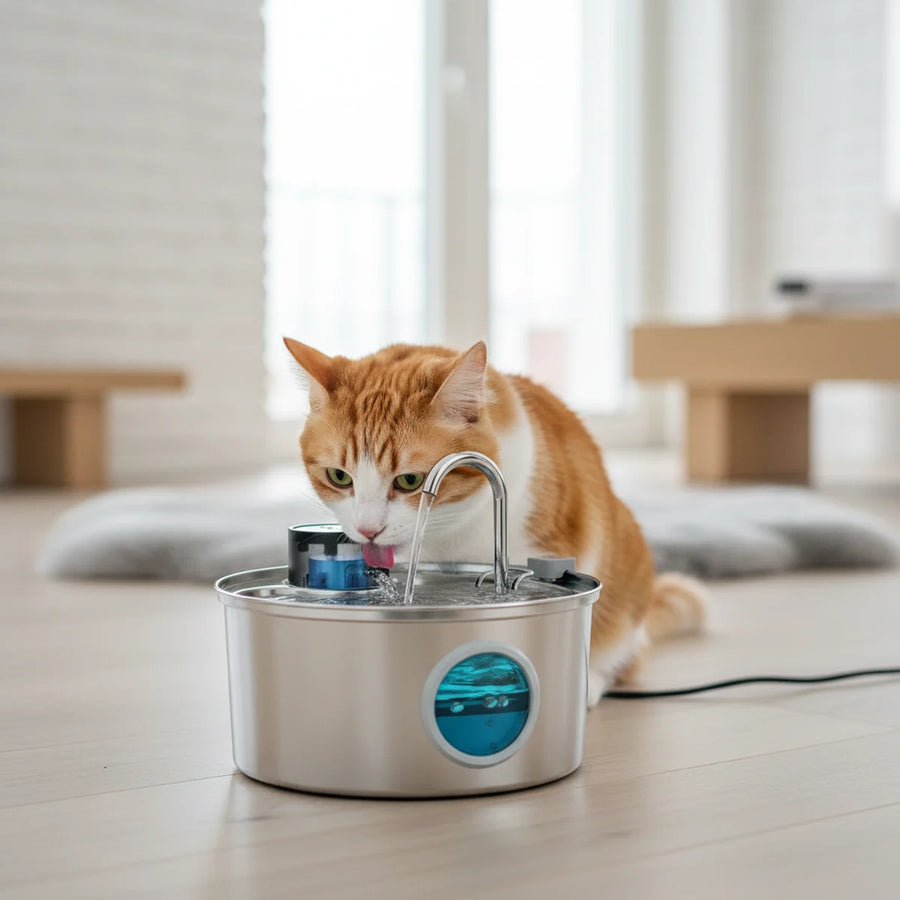
Many cats are drawn to moving water, which seems fresher. Filtered, well-maintained cat water fountains often encourage more frequent drinking. Set one next to the usual bowl and let your cat explore it.
3. Keep water away from food
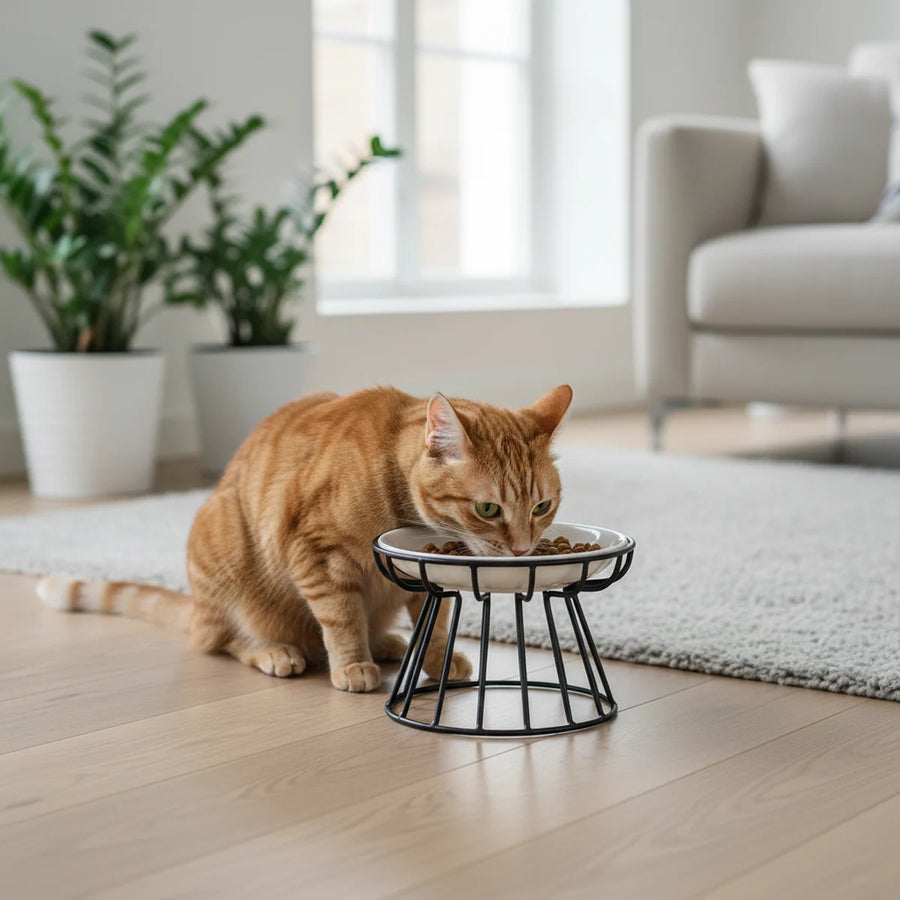
In the wild, cats avoid drinking near prey for fear of contamination. Put water a few feet away from the food bowl.
4. Keep water away from the litter box
No cat wants to drink near the bathroom. Keep a good distance, ideally in another room.
5. Use a wide, shallow bowl
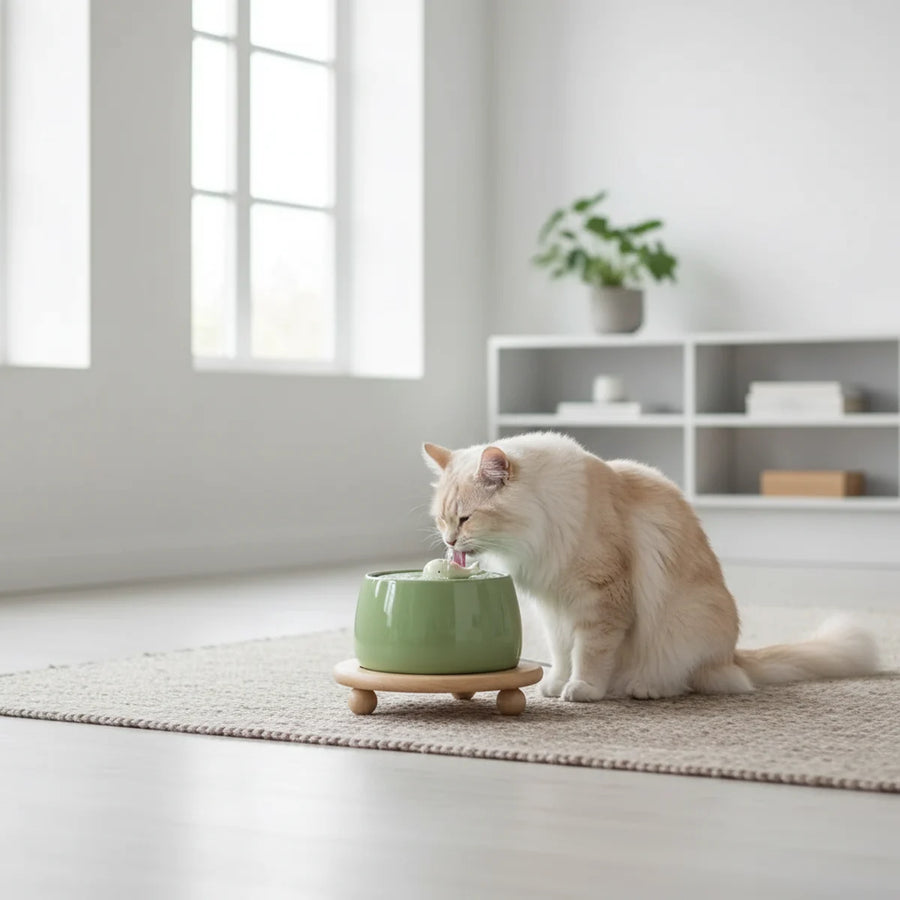
Cats' whiskers are sensitive, and narrow bowls that brush against them can be off-putting. Choose a wide ceramic, glass or stainless bowl filled to the brim.
6. Refresh water often
Fresh, clean water is more appealing. Change it at least daily, wash bowls every day and clean fountains weekly.
7. Add wet food
Swapping part of the kibble for wet food boosts water intake effortlessly. Make any diet change gradually over about a week, and ask your vet if your cat is on a special diet.
8. Mix water into wet food
A spoonful of lukewarm water stirred into wet food usually goes unnoticed and adds hydration.
9. Offer water up high
Some cats prefer drinking on furniture, away from other pets. A water station on an accessible shelf or near a favorite lookout can make a difference.
10. Make water part of play
Cats are often thirsty after a play session, so end games near a water station. You link effort, reward and hydration.
Multi-cat homes
A cat may avoid drinking if another cat guards resources. Spread water stations across different rooms and heights so every cat can drink without being watched or disturbed.
Summer, heating and senior cats
Hot weather and dry heated air increase water needs. Check water stations more often and offer a cool resting spot. Senior cats often feel thirst less, so place water close to their bed at an easy height and watch their habits closely.
How can I tell if my cat drinks enough?
Look at indirect signs: a shiny coat, normal energy and regular urine clumps in the litter box. Measuring how much water you pour in the morning and how much is left in the evening gives you a rough idea of intake over a few days. Note these observations before a vet visit; they help your vet assess the situation.
Keep the fountain clean
A neglected fountain can actually put cats off. Refresh the water every two or three days, take the fountain apart and wash it weekly and clean the pump, where hair builds up. Replace the filter as recommended by the maker. Clean water and a quiet pump reassure your cat.
The right bowl makes a difference
Some cats dislike plastic, which can hold odors. Ceramic, glass and stainless steel are more neutral. Temperature matters too: many cats like cool water, but not ice-cold. In summer, refresh water more often instead of adding ice cubes.
Watch without worrying too much
You rarely see your cat drink, because cats tend to sip quietly and often. Don't rely only on what you see; check bowl levels over several days, the litter box and your cat's general behavior. A curious, playful cat in good form is usually a well-hydrated cat.
Kittens and hydration
Kittens pick up good habits quickly. From day one, offer several easy-to-reach water stations at their height and a stable bowl they can't tip over. Age-appropriate food that's partly wet also supports hydration while they grow.
A simple daily checklist
- Fresh water in every station each morning.
- Bowls washed daily, fountain cleaned weekly.
- Water stations away from food and litter.
- A quick look at the litter box to spot changes early.
- A short play session ending near water.
Small, consistent habits like these go a long way toward helping your cat drink comfortably every day.
Mistakes to avoid
- A single bowl right next to the food: cats often ignore water placed too close to their meals.
- Water left standing for days: it loses freshness and appeal.
- Abrupt diet changes: switching food too quickly can upset your cat, so always transition over several days.
- Ignoring a sudden change: a cat that suddenly drinks much less, or much more, should see a vet.
Putting it all together
Start with the easiest wins: move water away from food and the litter box, switch to a wide ceramic or stainless bowl and add a second water station in another room. If your cat still seems uninterested after a week, introduce a fountain and some wet food. Keep notes on what works so you can share them with your vet at the next check-up. Most cats settle into better drinking habits within a couple of weeks once their water feels fresh, safe and easy to reach.
Above all, trust your knowledge of your own cat: you're the best person to notice when something is different, and acting early always makes things easier.
Travel and boarding
Changes in routine, such as travel, a move or a stay with a sitter, can make cats drink less for a few days. Bring their usual bowl or fountain, keep water away from the litter box in the new space and offer wet food to keep intake up while they settle in.
When in doubt, a quick call to your vet is always worthwhile.