In this guide
- What to know before you start
- Key times to take your puppy out
- The step-by-step method
- Using puppy pads the right way
- Playpens and beds are your allies
- Handling accidents
- Nighttime
- Mistakes to avoid
- A sample schedule for a 2–3-month-old puppy
- Apartment living
- How long does potty training take?
- Helpful supplies
- Potty training puppy signals to watch for
- Get the whole household on board
- When a puppy goes outside, then again inside
- Crate training and potty training
- Staying positive
- Bad weather days
- Frequently asked questions
Potty training a puppy comes down to frequent trips outside, especially after every meal, nap and play session, always to the same spot, with an instant reward when they go. Never punish accidents; clean them with an enzyme cleaner. Puppy pads are a backup, moved gradually toward the door. Expect a few weeks to a few months depending on age and consistency.
What to know before you start
Puppies don't have full bladder control yet, so they can't hold it for long. A common rule of thumb is that a puppy can wait roughly as many hours as their age in months, plus one, up to a few hours at most. A two-month-old puppy needs to go out very often, including at night. House training is built on repetition and rewards, not punishment.
Key times to take your puppy out
- first thing in the morning and after every nap;
- right after meals and after drinking a lot;
- after play or excitement;
- before bedtime;
- whenever they sniff and circle, whine or head to the door.
At first, also go out every one to two hours during the day, even without signs.
The step-by-step method
- Pick one potty spot outside and use it every time; the scent encourages your puppy to go again.
- Walk there on leash, calmly, without playing on the way, so your puppy stays focused.
- Add a cue word like "go potty" as they start to go.
- Reward immediately, within two seconds: a treat and happy praise.
- Play or walk afterward: if fun ends the moment they go, some puppies start holding it to stay outside longer.
Using puppy pads the right way
Absorbent pads or washable pee pads help at night, in high-rise apartments or when you have to be out. Treat them as a backup, not the goal. Put the pad near the door, gradually move it outside, then remove it once your puppy can hold it overnight. You'll find pads, playpens and gates in our dog accessories range.
Playpens and beds are your allies
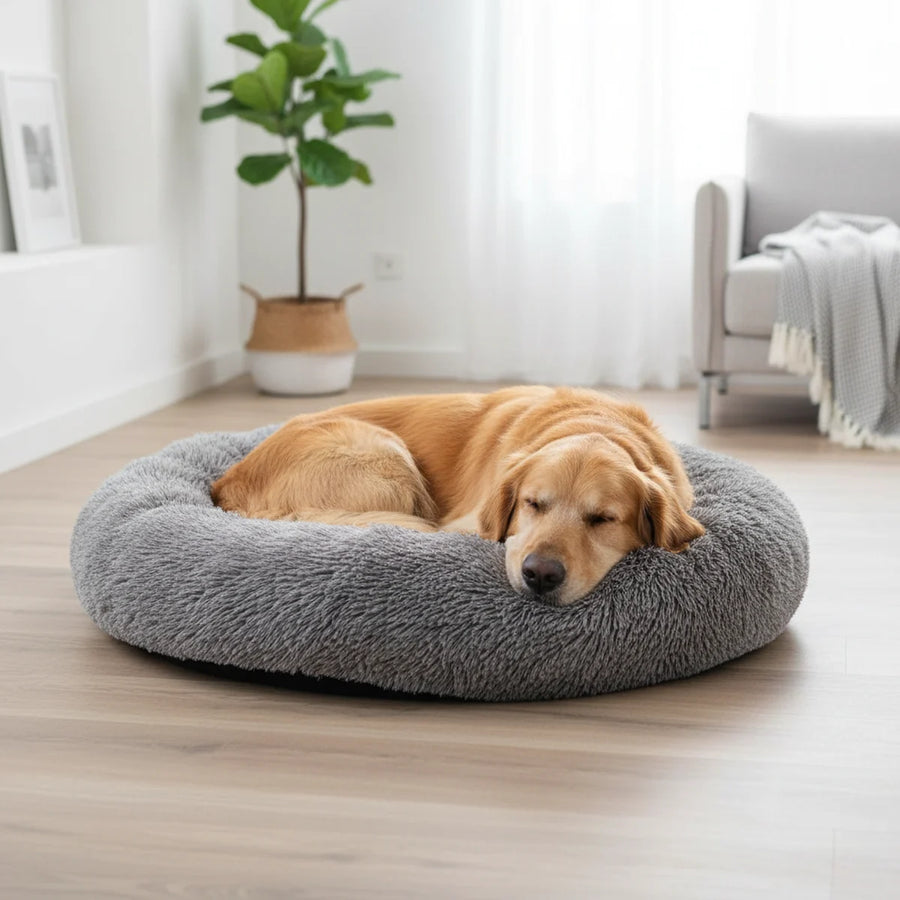
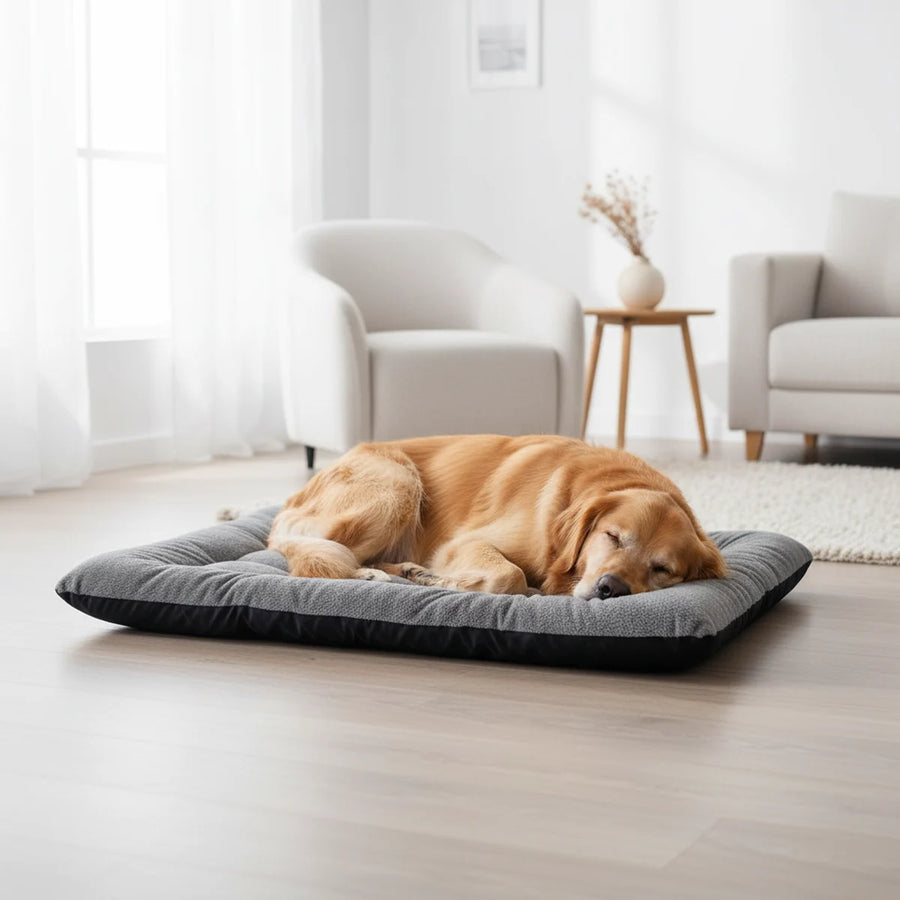
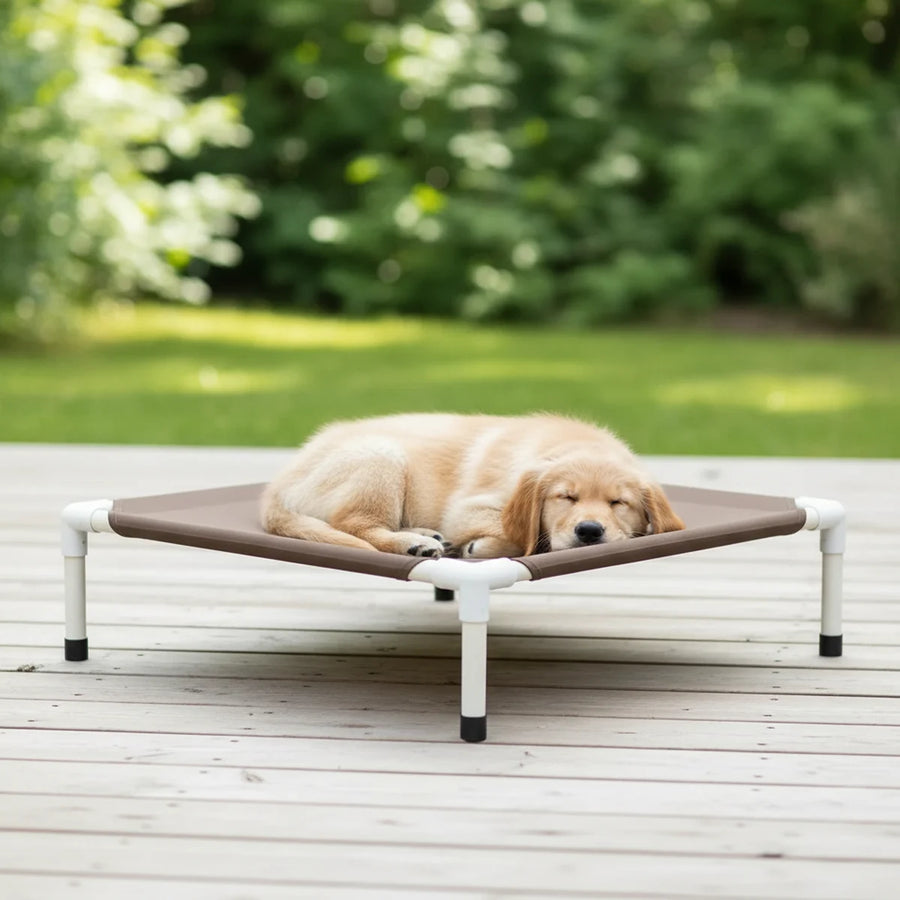
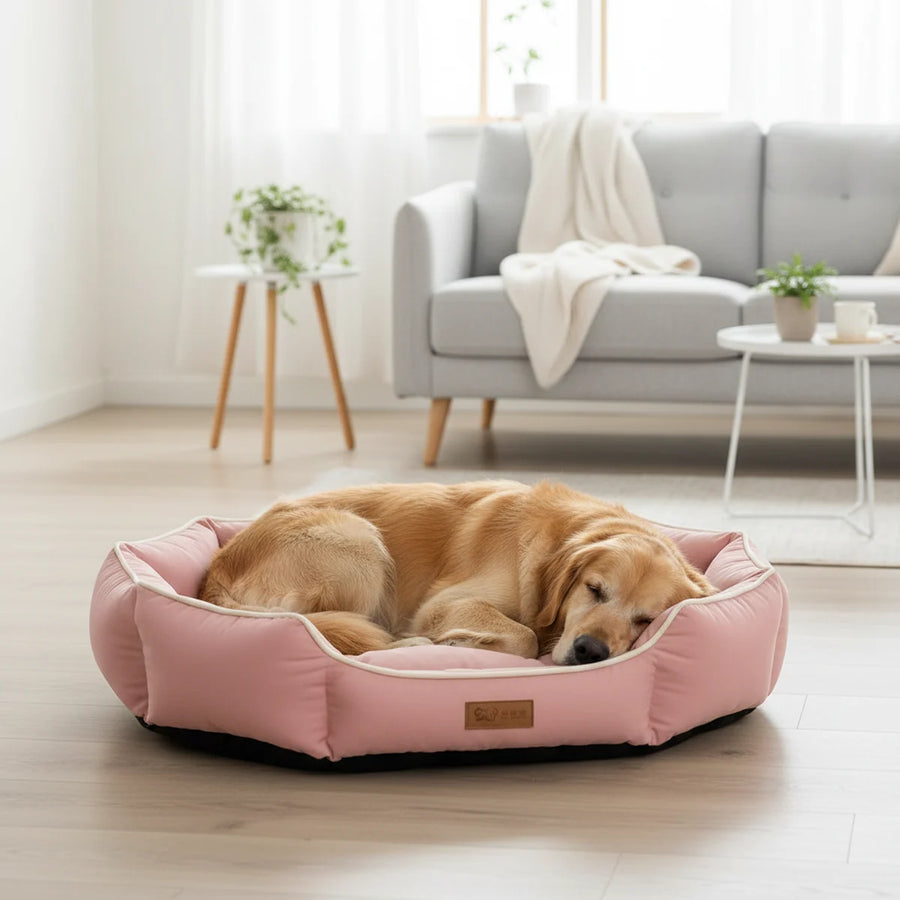
Puppies naturally avoid soiling where they sleep. A properly sized playpen with a bed, toys and water limits accidents when you can't supervise. Don't make it too large at first, or your puppy may pick a corner as a bathroom. The pen should always be a happy place, never a punishment.
Handling accidents
Accidents are part of learning. If you catch your puppy in the act, calmly interrupt without yelling, take them outside to their spot and reward if they finish there. If you find an accident later, say nothing; puppies can't connect it to something that already happened. Clean with an enzyme cleaner or an ammonia-free product, since ammonia smells can draw them back to the same spot.
Nighttime
In the first weeks, a young puppy usually needs one nighttime break. Keep their bed near your bedroom so you hear them stir. Take them out calmly with no play and dim lights, then settle them back down. Serve the last meal a few hours before bed and do a final potty break right before sleep. Nights get longer week by week.
Mistakes to avoid
- Punishing or rubbing their nose in it: puppies mostly learn to hide when they go.
- Leaving them alone too long: they physically can't hold it yet.
- Rewarding too late, once you're back inside: the reward must follow the behavior immediately.
- Changing spots or rules constantly: consistency is everything.
- Keeping pads forever: they should be a temporary step.
A sample schedule for a 2–3-month-old puppy
- Wake-up: straight outside, reward.
- Breakfast: out again 10–20 minutes after eating.
- Morning: play, nap in the playpen, out after every nap.
- Lunch: potty break after the meal.
- Afternoon: out every one to two hours, short training sessions.
- Dinner: early evening, then outside.
- Bedtime: one last calm trip out, plus a nighttime break if needed.
Apartment living
Every minute counts when you live upstairs. Keep the leash by the door, carry a young puppy down the stairs to avoid accidents on the way and choose a patch of grass close to your building. A pad on the balcony can be a stepping stone before switching fully to outdoor breaks.
How long does potty training take?
Most puppies become reliable between four and six months, sometimes sooner with great consistency and sometimes later for small breeds. Occasional setbacks are normal, especially when routines change. If a house-trained puppy suddenly starts having accidents everywhere, or urinates very often in small amounts, check in with your vet.
Helpful supplies
- a light leash and well-fitted harness for potty trips;
- tiny, high-value training treats;
- washable pads or absorbent pads for the early weeks;
- a playpen or gate to keep their space safe;
- an enzyme cleaner for accidents;
- poop bags and a holder for outdoor cleanup.
Potty training puppy signals to watch for
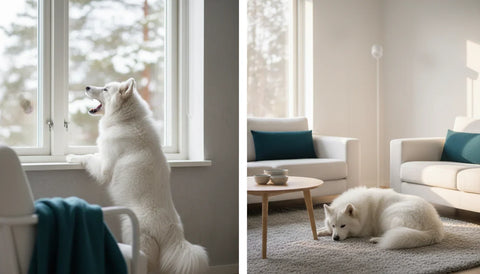
A big part of successful potty training puppy routines is reading the signs. With a little observation, you'll quickly learn when your puppy needs to go: persistent sniffing, circling, suddenly stopping play, whining or heading to the door. Some puppies start scratching the door after a few weeks. Act right away: grab the leash and head out even if you're not sure. A trip outside "for nothing" always beats an accident.
Get the whole household on board
Puppies learn faster when everyone follows the same rules: same spot, same cue word, same instant reward. Post the potty schedule on the fridge and log successes and accidents for the first few weeks. The log shows you the risky moments so you can adjust timing.
When a puppy goes outside, then again inside
Some puppies pee outside and then again indoors a few minutes later. Usually they weren't completely finished, distracted by everything going on outside. Stay at the potty spot a little longer, let your puppy sniff calmly and wait until they're truly done before heading back in.
Crate training and potty training
A crate sized so your puppy can stand, turn and lie down, but not much more, supports house training in the same way a playpen does, since puppies avoid soiling their sleeping area. Introduce it gradually with treats and meals inside, keep sessions short at first and always take your puppy straight outside after crate time.
Staying positive
Some days it will feel like nothing is working, and that's normal. Compare week to week using your log rather than day to day, and you'll see real progress. Celebrate the wins, like the first full night without an accident or the first time your puppy asks to go out. Patience and consistency always pay off in the end, and the habits you build now will last a lifetime.
Bad weather days
Many puppies resist going out in rain or cold. Keep trips short, stand under shelter near the potty spot if you can, use an extra-tasty reward and dry paws with a towel afterward. A small raincoat helps short-coated puppies. Don't skip trips on bad days; consistency matters most.
With patience and a steady routine, your puppy will get there sooner than you think.
Every small success is worth celebrating along the way.