In this guide
- Why dogs struggle in the heat
- Dogs most at risk
- Warning signs to know
- Adjust your walks
- Water, water, water
- Create cool zones at home
- Cooling gear
- Never leave a dog in a parked car
- Should you shave your dog for summer?
- Sun and paw protection
- Adjust mealtimes
- Mistakes to avoid
- A sample heat-wave day
- How to keep dog cool: a pre-heat-wave checklist
- Calm activities for hot days
- Traveling with your dog in summer
- Know your dog's normal
- Frequently asked questions
Dogs struggle to regulate heat because they barely sweat and cool down mainly by panting. To keep your dog cool, walk early in the morning and late in the evening, avoid hot pavement, keep fresh water everywhere, offer a cool spot (cooling mat, tile, shade) and never leave your dog in a car. Heavy panting, weakness or stumbling means calling a vet right away.
Why dogs struggle in the heat
Unlike us, dogs hardly sweat; their only effective sweat glands are in their paw pads. To cool down, they pant, which evaporates moisture from the tongue and airways, and they seek out cool surfaces. That system hits its limits quickly in hot, humid air, so dogs need our help during heat waves.
Dogs most at risk
- Flat-faced breeds like bulldogs, pugs, boxers and shih tzus, whose short muzzles make panting less effective.
- Puppies and seniors, who regulate temperature less well.
- Overweight dogs or dogs that aren't used to exercise.
- Thick or dark coats, which absorb more heat in the sun.
- High-drive dogs that won't stop playing on their own.
Warning signs to know
Heatstroke is an emergency. Watch for:
- intense, noisy panting that doesn't settle with rest;
- very red or unusually pale tongue and gums;
- heavy, thick drool;
- weakness, wobbling, stumbling or suddenly lying down;
- vomiting or confusion.
Move your dog to shade with airflow, wet them with cool (not ice-cold) water, especially the belly, inner thighs and paw pads, offer small sips of water and call a vet immediately, even if your dog seems to improve.
Adjust your walks
Timing
Walk early in the morning and late in the evening when it's coolest. Midday outings should be short potty breaks in the shade.
The pavement test
Press the back of your hand on the pavement for seven seconds. If it's too hot for you, it's too hot for paw pads. Choose grass, dirt trails and shaded routes.
Dial down the intensity
Skip running, biking and long fetch sessions in the heat. Swap them for calm indoor games like hiding kibble around the house.
Water, water, water
Your dog needs constant access to fresh water, in several bowls indoors and out. Refresh it several times a day. On walks, carry a dog water bottle so you can offer drinks regularly; you'll find options in our dog accessories. Some dogs drink more readily from water with a splash of low-sodium broth, or enjoy ice cubes to crunch, in moderation.
Create cool zones at home
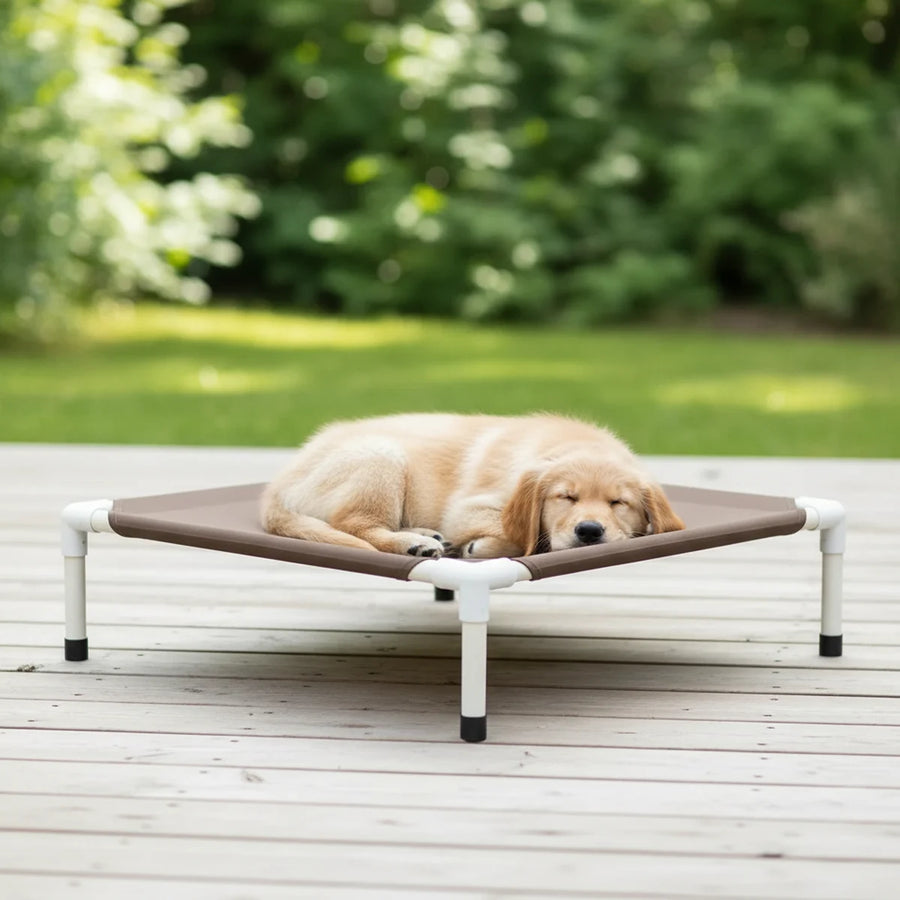
Close blinds during the hottest hours and ventilate in the evening and at night. Let your dog lie on tile floors, which stay cool. A dog accessories mat gives a cooler surface wherever your dog likes to rest, with nothing to plug in. A raised cot lets air flow underneath. A fan can help as long as your dog can move away from it.
Cooling gear
- Cooling mat: gel or technical fabric that activates under body weight.
- Cooling vest: soaked before a walk, it helps your dog stay cooler through evaporation.
- Cooling bandana: the same idea, worn around the neck.
- Kiddie pool: a shallow tub of water in the shade delights many dogs.
Gear helps, but it never replaces shade, water and rest during the hottest part of the day.
Never leave a dog in a parked car
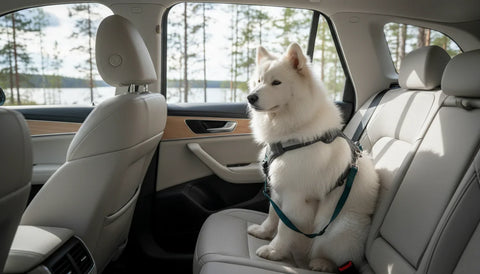
Not for a few minutes, not in the shade, not with the windows cracked. The temperature inside a parked car climbs fast and can become dangerous. If your dog can't come inside with you at your destination, leave them home. On the road, keep the cabin ventilated, stop in the shade and offer water often.
Should you shave your dog for summer?
Not necessarily. For double-coated breeds like shepherds, huskies and golden retrievers, the undercoat also insulates against heat and protects skin from sunburn, so a close shave can backfire. Regular brushing to remove dead undercoat helps the coat breathe. For long-haired breeds without an undercoat, a shorter trim from a groomer may make sense.
Sun and paw protection
Dogs with light or thin coats, and sparsely furred areas like the nose and belly, can get sunburned. Limit sun exposure during peak hours. After walks, check paw pads: redness, blisters or limping can signal a burn that your vet should examine.
Adjust mealtimes
Many dogs eat less when it's hot. Feed during cooler hours, don't leave wet food sitting in the sun and avoid exercise right after meals. Stuffed enrichment toys from the freezer make a refreshing activity; offer them under supervision.
Mistakes to avoid
- Walking on pavement in the middle of the afternoon.
- Leaving your dog in the yard without shade.
- Using ice-cold water on an overheated dog; cool water is better.
- Assuming a dog that's still playing is fine; some dogs never stop on their own.
A sample heat-wave day
- 6–8 a.m.: main walk, in the shade if possible.
- Daytime: blinds closed, rest on a cooling mat or tile, fresh water, calm games.
- Noon: short potty break in the shade.
- After 9 p.m.: a longer second walk once the ground has cooled.
How to keep dog cool: a pre-heat-wave checklist
When the forecast shows several hot days in a row, get ready ahead of time. This quick checklist covers how to keep dog cool at home and on the go:
- several water bowls around the house and yard, plus a water bottle ready for walks;
- a cooling mat set up in the shade, in your dog's favorite resting spot;
- blinds closed during peak heat and a cool room your dog can always reach;
- walks scheduled for early morning and late evening;
- your vet's number and the nearest emergency clinic saved in your phone.
Calm activities for hot days
A dog that goes out less still needs an outlet. Swap physical exercise for sniffing and brain games: hidden kibble around the house, snuffle mats, treat-dispensing toys and short indoor training sessions. A few minutes of searching tires a dog without raising body temperature much. Water play in the shade, in a kiddie pool or under a gentle sprinkler, is a hit with many dogs too.
Traveling with your dog in summer
Plan road trips for cooler hours, run the air conditioning, use window shades and stop often in shaded rest areas for water and a short stretch. At your destination, find out where shaded walking spots and water sources are, and pack a cooling mat so your dog has a familiar cool spot in the new place. Avoid leaving your dog in hotel rooms or rentals without air conditioning during the hottest part of the day.
Know your dog's normal
Every dog handles heat differently. Pay attention to how your dog usually pants, moves and rests on mild days, so you can spot quickly when something seems off. Early action is always easier than catching up once a dog is overheated.
Summer can be wonderful for dogs when you plan around the heat.
Keep an eye on the forecast, adjust your routine early and give your dog plenty of shade, water and rest, and the hottest weeks of the year can be just as enjoyable for them as for you.